
Broken Key Extraction Service Lancashire
Stop. Do Not Touch the Lock Yet.
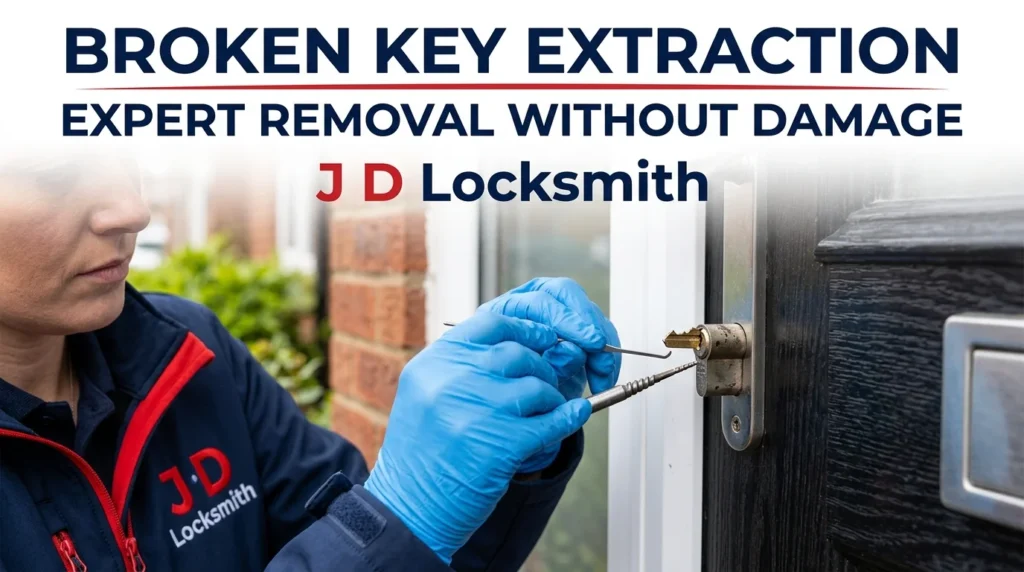
A key broken inside a lock feels like a disaster. It is not. In most cases, it is a straightforward job for an experienced locksmith — and one that does not require replacing the lock at all.
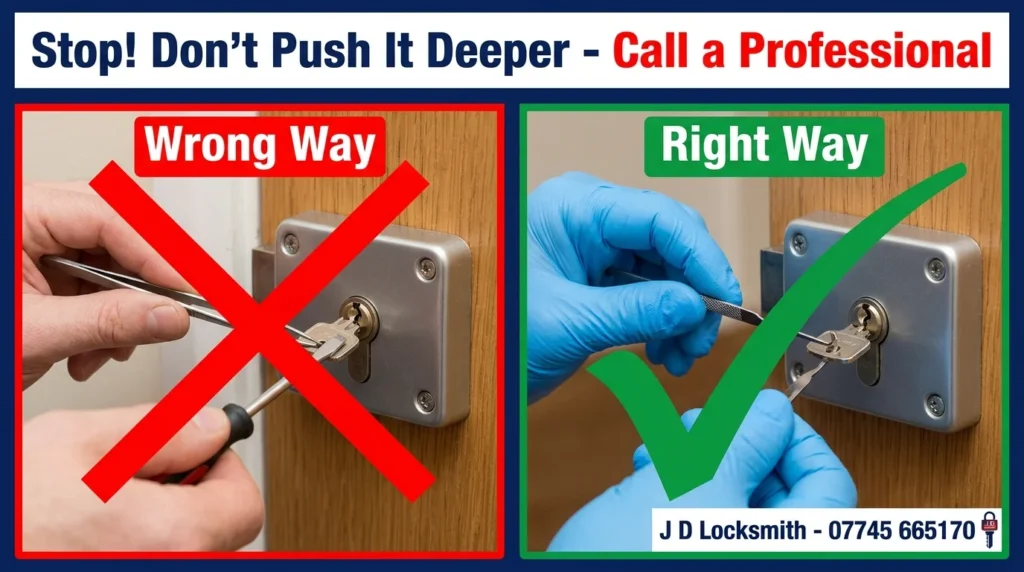
But here is where things go wrong. The moment most people discover a key has broken off in a lock, they reach for something to fish it out. A pair of tweezers. A thin screwdriver. A hairpin. A penknife blade. These attempts almost always make the situation harder to fix, not easier. The broken piece gets pushed deeper into the barrel. It rotates into a position that makes it harder to apply extraction tools. What would have been a five-minute job becomes a thirty-minute one — or worse, results in the lock needing to be replaced after all.
If your key has just snapped, leave the lock exactly as it is and call us on 07745 665170. That single step makes a real difference to the outcome.
Why Keys Break in Locks
Understanding why this happened can help prevent it from happening again. Keys break inside locks for several reasons, and the cause is usually one of the following:
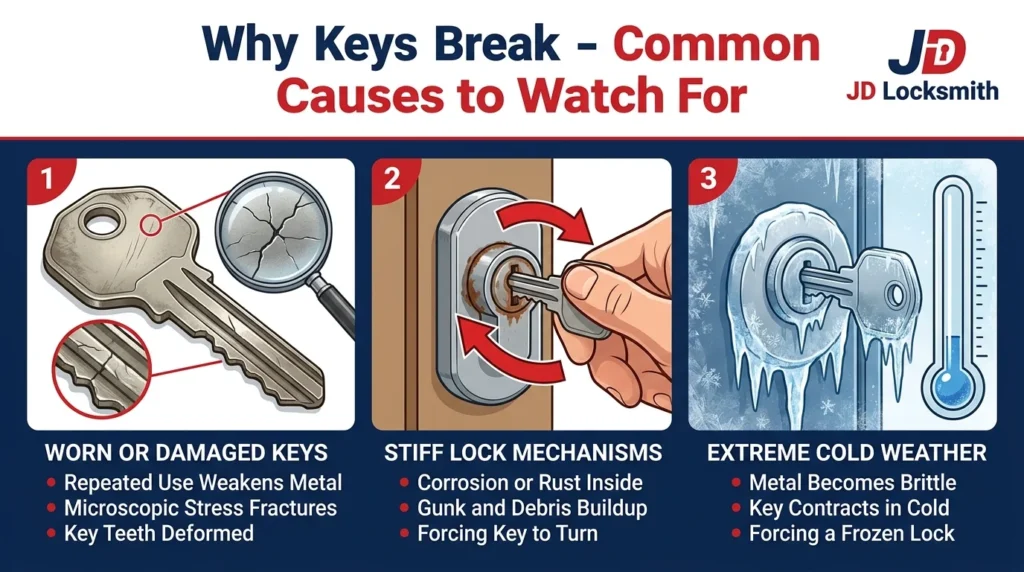
Wear over time. Keys are thin pieces of metal that flex slightly every time they are used. Over years of daily use, tiny stress fractures develop along the blade — particularly at the bow, where the key is gripped and torqued. Eventually, the metal gives way.
A worn or stiff lock. If a lock has become harder to operate over time — requiring more force to turn — that extra force transfers directly to the key blade. A lock that is stiff, misaligned, or in need of lubrication puts far greater stress on a key than a well-maintained one. This is especially common with uPVC doors — our uPVC door problems and repair guide goes into detail on why uPVC mechanisms wear and what to watch for before they fail.
Cold weather. Metal contracts in cold temperatures, and both keys and lock cylinders behave differently in winter. Keys become more brittle. Cylinders tighten slightly. This is why broken keys are significantly more common in the colder months.
A key that was already damaged. A key that has been dropped, bent, or used to open packaging rather than locks is more likely to fail under normal use. If your key had visible signs of wear or slight deformation, that was likely a factor.
What We Do
When we arrive, we assess the position and depth of the broken piece before doing anything. The method we use depends on how far the key has broken off, whether any of the blade protrudes from the barrel, and what type of lock is involved.
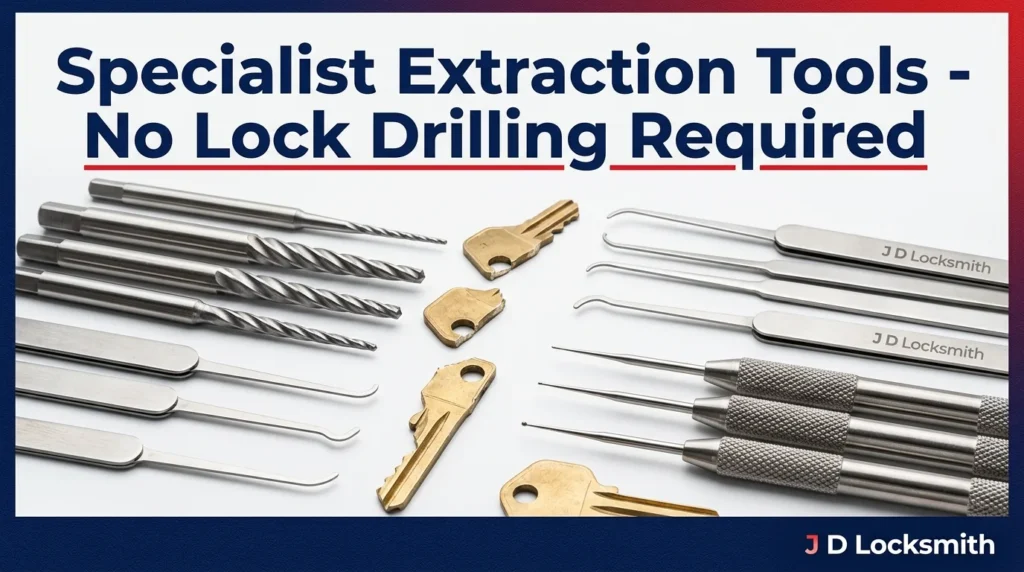
In the majority of cases, we use a specialist hook-and-probe extraction tool. This allows us to grip the broken section of the key blade and draw it back out of the barrel cleanly, without applying rotational force that could push it further into the barrel.
For cases where the broken key has been pushed deeper into the barrel — often due to previous DIY extraction attempts — we have additional techniques and tools available. These take a little longer but still avoid drilling in most situations.
Once the broken piece is removed, we test the lock to ensure it is operating correctly. If the lock has been damaged, is stiff, or was already worn before the key broke, we advise on the appropriate next step — whether that is lubrication, adjustment, or a cylinder replacement. Our door lock repair and replacement page explains the full range of door lock work we carry out if a more involved repair is needed.
If a Broken Key Has Left You Locked Out
Sometimes the key breaks while you are trying to get in, leaving you on the outside. This is both a broken-key extraction job and an emergency lockout.
In that situation, call us straight away. We deal with this combination regularly — we gain entry first, then retrieve the broken piece and assess the lock condition. You do not need to be standing on the doorstep trying to solve it yourself. Our emergency lockout page covers what to expect when we attend a lockout call, and our blog post on what to do when you are locked out of your house is worth a read while you wait.
When a Lock Replacement Is Needed
We will always tell you honestly if extraction is not possible or if the lock needs to be replaced. There are situations where this is the right outcome — particularly if the lock was already in poor condition, or if previous extraction attempts have damaged the barrel. In these cases, a new cylinder is the cleanest solution.
Replacing a euro cylinder is a quick job. We carry a range of anti-snap, BS-rated cylinders in the most common sizes. If a replacement is needed, the job is usually finished within the same visit at a clear, agreed price.
Preventing a Broken Key From Happening Again
Once the immediate problem is sorted, it is worth taking a few practical steps to reduce the risk of a repeat.
Get a spare cut. A significant number of the people who call us about broken keys do not have a spare. A spare key kept with a trusted neighbour, a family member, or in a secure keysafe removes the urgency completely if it happens again. Our spring home security checklist includes key management as one of the key household security habits worth building into your routine.
Have the lock checked. A stiff or misaligned lock is the most common cause of broken keys. If your lock has been getting harder to operate, have it looked at before the key gives way completely. Lubrication and minor adjustments are inexpensive and significantly extend the life of the lock.
Replace old keys. If a key is visibly worn, has been bent at any point, or is more than 5 to 10 years old, it is worth having a fresh cut made from the original. Old keys develop stress fractures that are not always visible.
Frequently Asked Questions
Can you extract a key that has been pushed all the way into the lock?
In many cases, yes. If the key has been pushed deeper due to a DIY extraction attempt, the job is harder but often still achievable without drilling. The sooner you call us and stop attempting extraction yourself, the better the outcome is likely to be.
Will you need to replace my lock to get the key out?
In most cases, no. Lock replacement is our last resort, not our first move. We use specialist extraction tools designed specifically for this purpose, and we only recommend a new cylinder if extraction is genuinely not possible or if the lock itself is damaged.
How long does a broken key extraction take?
For a straightforward extraction where the key has broken cleanly and has not been pushed further in, the job typically takes 10-20 minutes. More complex situations take longer. We give you an honest assessment when we arrive.
What type of locks do you work on?
We extract broken keys from euro cylinders, Yale-style pin tumbler locks, mortice locks, and padlocks. If you are not sure what type of lock you have, describe it to us over the phone, and we can advise you.
What if the lock was already stiff before the key broke?
A stiff lock is often the reason the key broke in the first place. Once the broken piece is out, we assess the lock and tell you honestly whether it needs attention. In some cases, lubrication is enough. In others, the cylinder or mechanism needs to be replaced. We give you a clear recommendation and a price before doing anything further.
Areas We Cover
J D Locksmith covers broken key extractions across Lancashire and Yorkshire. We work regularly in Burnley, Nelson, Colne, Barnoldswick, Skipton, Settle, Clitheroe, Rawtenstall, Bury, Lancaster, Morecambe, Carnforth, Kendal, Silsden, Cross Hills, and Cowling. We are a local, independent locksmith — and when you call us, you deal with us directly from start to finish.
Key Broken in Your Lock Right Now?
Step away from the lock and give us a call. The sooner we get there, the more options we have.
Call: 07745 665170
Email: dan@jdlocksmith.co.uk
A Local Locksmith for Local People.