
UPVC Door Problems: Complete Repair & Maintenance Guide
You’re heading out for the day. You close your front door and lift the handle to lock it. Nothing happens. Or the handle lifts, but you can feel something’s not right. It may make a grinding noise. The key won’t turn all the way. Or worst of all, the door won’t lock.
This exact scenario plays out in Lancashire homes every single day. UPVC doors are brilliant when they work properly. They’re energy-efficient, secure, and low-maintenance. But when something goes wrong, they go from being your home’s main security feature to a source of constant frustration and worry.
I’m Dan Collins, and I’ve been repairing UPVC door mechanisms throughout Lancashire and Yorkshire for years. I’ve seen every UPVC door problem you can imagine. Mechanisms that have seized solid. Handles that have snapped off. Locks that engage on some points but not others. Doors that have dropped so far they scrape the frame.
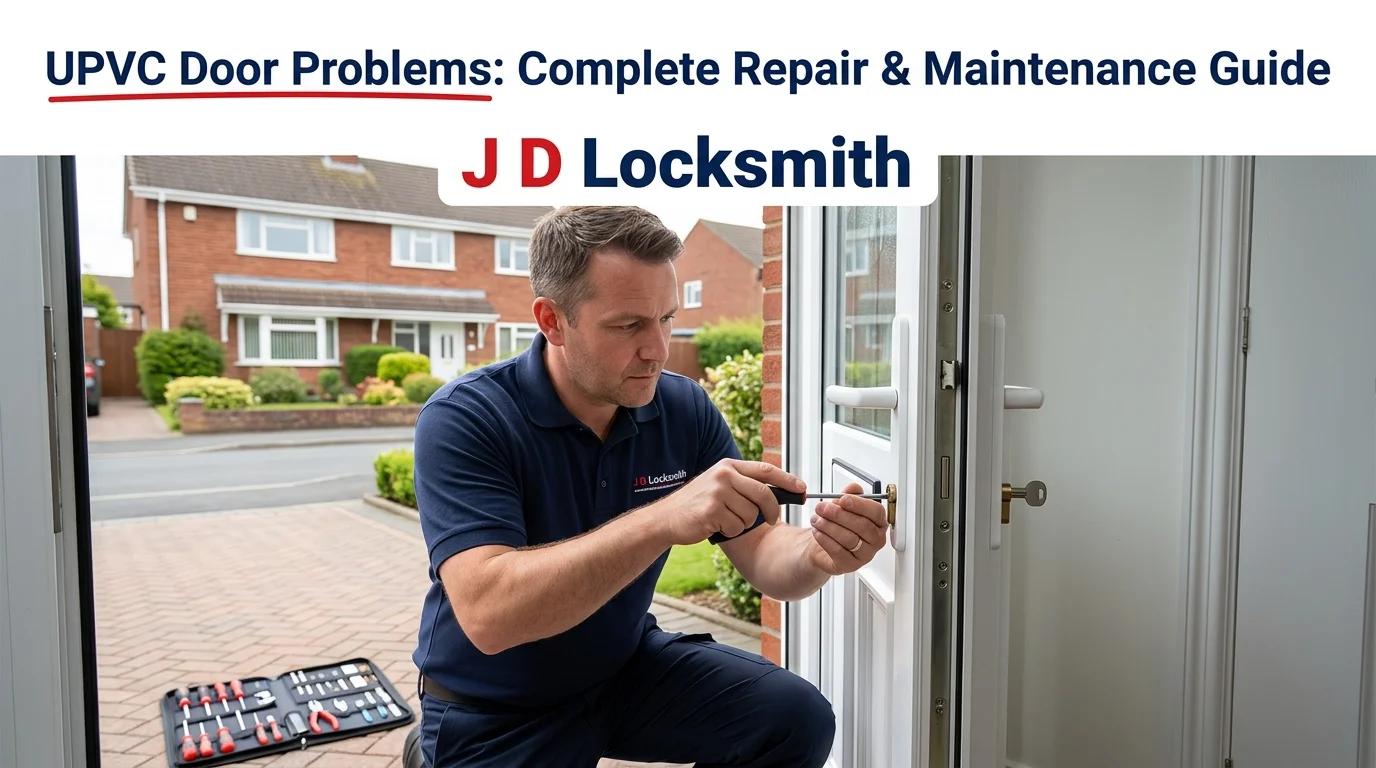
The good news? Most UPVC door problems follow predictable patterns. Once you understand what’s actually happening inside that door, the problems make sense. More importantly, you’ll know what can be fixed easily, what needs professional help, and what you can do to prevent problems in the first place.
This guide explains the real causes behind common UPVC door problems in Lancashire homes. Not generic advice from someone who’s never actually repaired one. This comes from hands-on experience fixing these doors day after day.
Understanding Your UPVC Door System
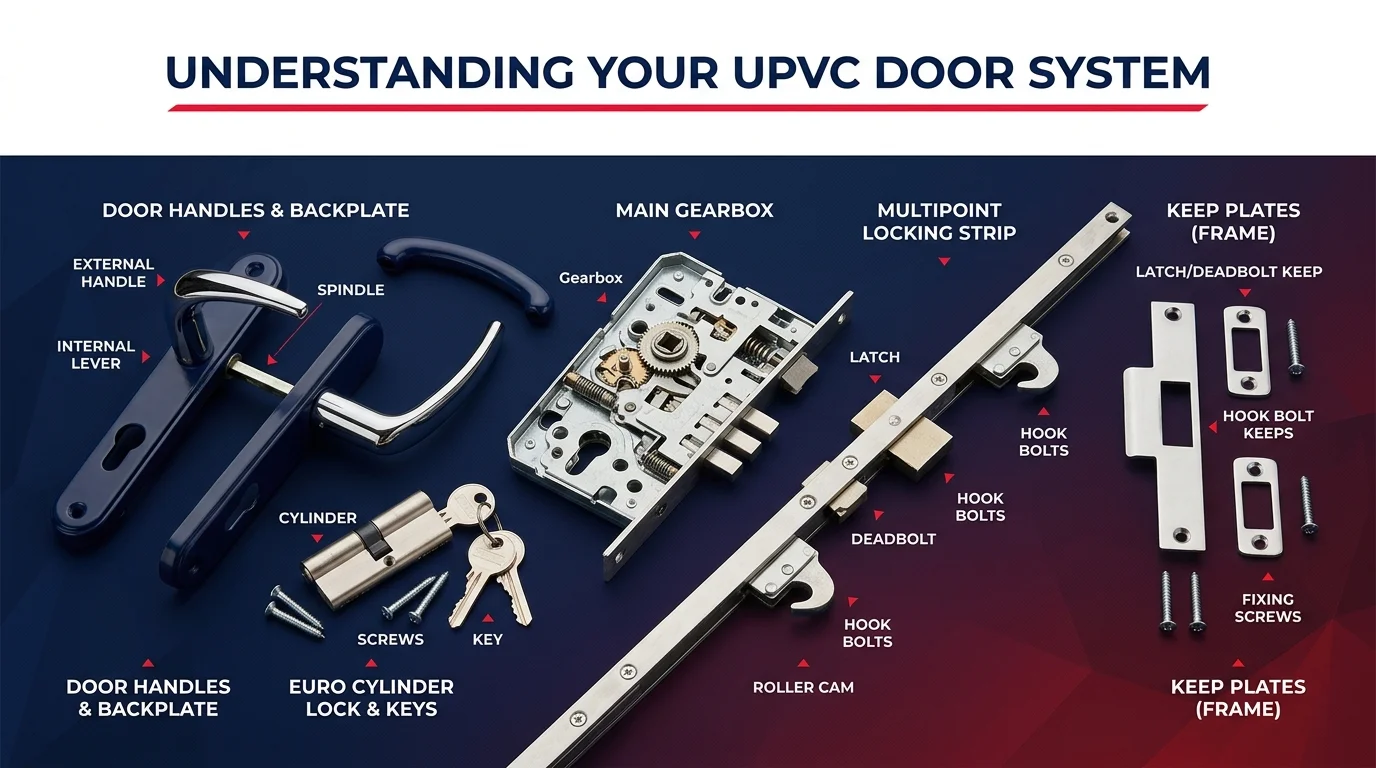
Before we get into specific problems, you need to understand how UPVC doors actually work. This matters because most homeowners don’t realize their UPVC door isn’t just a lock—it’s a multipoint locking system.
What Makes UPVC Doors Different
A traditional wooden door has one lock. You turn the key, one bolt moves, and you’re done. Your UPVC door works completely differently.
When you lift the handle on a UPVC door, you’re engaging a multipoint locking mechanism. This mechanism runs the full height of the door. It typically locks in 3-5 different places simultaneously. There are hooks or bolts at the top. More in the middle. And additional ones at the bottom.
A central gearbox connects all of these locking points. When you lift the handle, the gearbox moves all the locking points into position. Then, when you turn the key, it locks everything in place.
This system provides excellent security when it works. But it also means there are far more parts that can go wrong compared to a simple lock.
The Parts That Cause Problems
Inside your UPVC door mechanism, several key components work together. The gearbox is the heart of the system. It’s the central mechanism that controls all the locking points. The keep is the metal plate on the door frame where the locks engage. The cylinder is where you put your key. The handles connect to the gearbox and operate the mechanism.
Every one of these parts can fail. And when one part fails, it often affects the whole system.
When Your UPVC Door Won’t Lock Properly
This is the most common UPVC door problem I see in Lancashire. You lift the handle, but the door won’t lock. Or it feels different from how it used to. Here’s what’s actually happening.
The Door Has Dropped
UPVC doors are heavy. Over time, gravity does its work. The door gradually drops in the frame. We’re talking millimetres here, but that’s enough to cause problems.
When the door drops, the locking points no longer line up perfectly with the keeps in the frame. You lift the handle, and some points engage, but others don’t. Or they all engage, but with resistance, because they’re slightly misaligned.
You’ll notice this has happened if the door scrapes the threshold when you close it. Or if you can see a gap at the top of the door that wasn’t there before. The door might also catch on the frame when closing.
Sometimes you can still force the handle up and turn the key. But you’re putting stress on the mechanism every time. Eventually, something will break or seize.
What You Can Do: UPVC doors have adjustable hinges. The door can often be realigned by adjusting these hinges. This isn’t difficult, but it requires the right tools and knowing which way to adjust. If you’re not confident, get a professional to do it. A simple adjustment now prevents an expensive mechanism replacement later.
The Gearbox Has Failed
The gearbox is mechanical. It has moving parts, springs, and components that wear out. In Lancashire’s damp climate, these parts can corrode. Springs weaken. Plastic components crack from temperature changes.
A failing gearbox shows specific symptoms. The handle might lift but feel loose or floppy. You might hear clicking or grinding when operating it. Some locking points might work, while others might not. The key might turn, but you can tell that not everything is locking.
Gearbox failure often happens gradually. It works fine for months, then starts getting stiff. Then you need to force it. Then one day it just won’t work at all.
What You Can Do: Once a gearbox starts failing, it needs to be replaced. This isn’t a DIY job for most people. The door needs to be taken apart, the old gearbox removed, and a new one fitted correctly. For professional UPVC door repairs in Lancashire, locksmiths keep replacement mechanisms in stock for the most common door types.
The Keep Has Become Damaged
The keep is the metal plate on your door frame where the locking points slot into. These can become damaged or worn over time. The holes get bigger. The metal bends. Sometimes screws work loose.
If your keeps are damaged, you’ll feel the locking points engaging, but they won’t secure properly. The door might feel locked, but it could be forced open relatively easily. You might also see marks on the keys where the locking points have been repeatedly hit.
What You Can Do: Damaged springs can usually be replaced without changing the whole mechanism. New keeps are inexpensive. The job involves unscrewing the old ones and fitting new ones. But they must be positioned exactly right, or you’ll make alignment problems worse.
When the Handle Breaks or Becomes Loose
UPVC door handles take a lot of force over their lifetime. Every time you operate the door, you’re putting pressure on the handle. Eventually, problems develop.
Handles That Feel Loose or Wobbly
This usually means the screws holding the handle have worked loose. It might also mean the spindle (the square bar connecting both handles through the door) has worn.
A loose handle is annoying but also a security risk. If the handle isn’t firmly connected to the mechanism, the locking system won’t operate properly. The door might appear locked when it’s not fully secured.
What You Can Do: Check the screws on both handles. There are usually grub screws on the inside handle. Tighten these. If the handle still feels loose, the spindle or handle mechanism might be worn. Handles are relatively cheap to replace, and it’s a fairly straightforward job.
Handles That Have Snapped
UPVC door handles are usually made of metal, but the operating mechanism inside can include plastic components. These plastic parts can crack or snap, especially in cold weather.
If your handle has snapped, you obviously can’t operate the door properly. This is a security issue that needs to be fixed immediately.
What You Can Do: Broken handles need to be replaced. The good news is that replacement handles are readily available and not expensive. But you need to get the right type for your specific door. If you’re in Burnley or elsewhere in Lancashire and your handle has broken, emergency locksmith services can usually replace it on the spot.
Handles That Are Stiff to Operate
When lifting your door handle becomes difficult, the mechanism is likely faulty. This isn’t normal. Don’t just use more force and hope it sorts itself out.
Stiffness usually indicates either misalignment (the door has dropped) or that the mechanism is starting to fail. It might also mean the locking points need lubricating or there’s debris in the mechanism.
What You Can Do: First, try lubricating the locking points with a dry lubricant or silicone spray. Don’t use oil or WD-40, as these attract dirt. If lubrication doesn’t help and the handle is getting stiffer over time, get the mechanism checked before it fails.
When the Key Won’t Turn or Gets Stuck
Problems with the key and cylinder are common on UPVC doors. These issues can leave you locked out—or locked in.
The Key Is Hard to Turn
If your key has gradually become harder to turn, the cylinder is wearing out or has dirt inside. UPVC door cylinders have pins and springs inside. These wear over time. Lancashire’s weather can let moisture in, causing corrosion.
A hard-to-turn key is a warning sign. It’s telling you the cylinder needs attention soon. Ignore it, and you’ll eventually snap the key in the lock, or the cylinder will seize completely.
What You Can Do: Try lubricating the cylinder with graphite powder or proper lock lubricant. Put a small amount on the key and work it in and out a few times. If this helps temporarily, but the problem comes back, the cylinder needs to be replaced. Cylinder replacement is straightforward, and cylinders aren’t expensive.
The Key Won’t Turn at All
If your key suddenly won’t turn, several things might have happened. The cylinder might have seized. The key might be worn. The mechanism might have failed in a locked position. Or there might be something blocking the cylinder.
This is frustrating because you can’t properly lock or unlock the door. If you’re stuck outside, it’s an emergency. If you’re stuck inside, it’s a safety issue.
What You Can Do: Don’t force the key. You’ll snap it. Try a lubricant first. If that doesn’t work, you need professional help. For emergency locksmith help in Skipton and across Lancashire, 24/7 services can get you in without damaging the door unnecessarily.
You’ve Snapped a Key in the Lock
Keys snap in UPVC door cylinders more often than you’d think. It happens when people force a worn key or try to turn a seized cylinder.
If you’ve got a broken key in your lock, don’t try to extract it yourself with tweezers or pliers. You’ll probably push it further in or damage the cylinder.
What You Can Do: Professional locksmiths have proper extraction tools. We can remove broken keys without damaging the cylinder. If the cylinder is damaged during extraction, we can replace it immediately. This is far better than DIY attempts that often make the situation worse.
When the Door Drags or Scrapes
UPVC doors that drag on the floor or scrape the frame are showing alignment problems. This might seem like a minor annoyance, but it’s causing damage every time you open or close the door.
Why Doors Drop
UPVC doors drop for several reasons. The hinges might be wearing out. The door is heavy, and constant use puts stress on the hinges over time. Hinges can also become loose if the screws work free. The frame itself moved slightly if the building had settled.
Whatever the cause, a dropped door creates problems. It misaligns the locking system. It puts extra stress on the mechanism. It can damage seals and affect the door’s energy efficiency.
What You Can Do: UPVC doors have adjustable hinges with three adjustment types. Height adjustment moves the door up or down. Lateral adjustment moves it left or right. Compression adjustment moves it closer to or further from the frame.
Adjusting these requires hex keys and knowing which screw does what. If you’re not confident, get a professional. Incorrect adjustment can make problems worse. Professional door specialists can realign a door properly in about 30 minutes.
The Real Cost of Ignoring UPVC Door Problems
Many Lancashire homeowners notice UPVC door problems but carry on using the door anyway. They force handles that are getting stiff. They turn keys that are becoming difficult to turn. They close doors that are scraping.
This always makes the problem worse and eventually more expensive.
Small Problems Become Big Ones
A door that’s slightly misaligned puts extra stress on the mechanism. The gearbox has to work harder. Parts wear faster. What could have been fixed with a simple adjustment ends up needing a full mechanism replacement.
A cylinder that’s getting stiff eventually seizes completely. This often happens when you’re trying to leave the house or lock up for the night. An emergency locksmith call costs far more than replacing the cylinder would have cost during normal hours.
Security Risks
A UPVC door that’s not locking properly is a security risk. You might think it’s locked because you’ve turned the key. But if the mechanism isn’t working correctly, some locking points may not engage.
Burglars know about UPVC door problems. They test handles. If your door isn’t fully secured, they’ll notice.
Insurance Issues
Many home insurance policies require that you maintain adequate security. If you make a claim after a break-in and your insurer finds your UPVC door wasn’t working properly, they might refuse the claim.
This is especially true if the door had obviously been locking incorrectly for a while. Ignoring a known security issue can void your insurance policy.
Preventing UPVC Door Problems
Most UPVC door problems can be prevented or caught early with simple maintenance.
Regular Checks Throughout the Year
Test your door every few months. Close it and lift the handle. Does it lift smoothly? Does it feel the same as usual? Turn the key. Does it turn easily? Open and close the door. Does it move freely without scraping?
These quick checks take two minutes. They’ll alert you to problems developing before they become serious.
Annual Lubrication
Once a year, lubricate the moving parts. Use silicone spray or dry lubricant on the locking points and hinges. Put graphite powder in the cylinder.
Don’t use oil or WD-40. These attract dirt and can make problems worse over time.
Keep Mechanisms Clean
Wipe down the inside of your door occasionally. Remove any dirt or debris from around the mechanism. Clean the creases in the frame.
Dirt build-up can affect how smoothly the mechanism operates.
Address Problems Quickly
When you notice something isn’t quite right, get it checked. Don’t wait until the door completely fails. A locksmith can identify and fix developing problems quickly and cheaply. Wait until something breaks, and the repair will cost more.
For comprehensive door maintenance services in Nelson and throughout Lancashire, professional locksmiths can inspect your UPVC door and address any issues before they become emergencies.
When to Call a Professional
Some UPVC door problems need professional attention. Don’t attempt these as DIY jobs unless you really know what you’re doing.
Mechanism Replacement
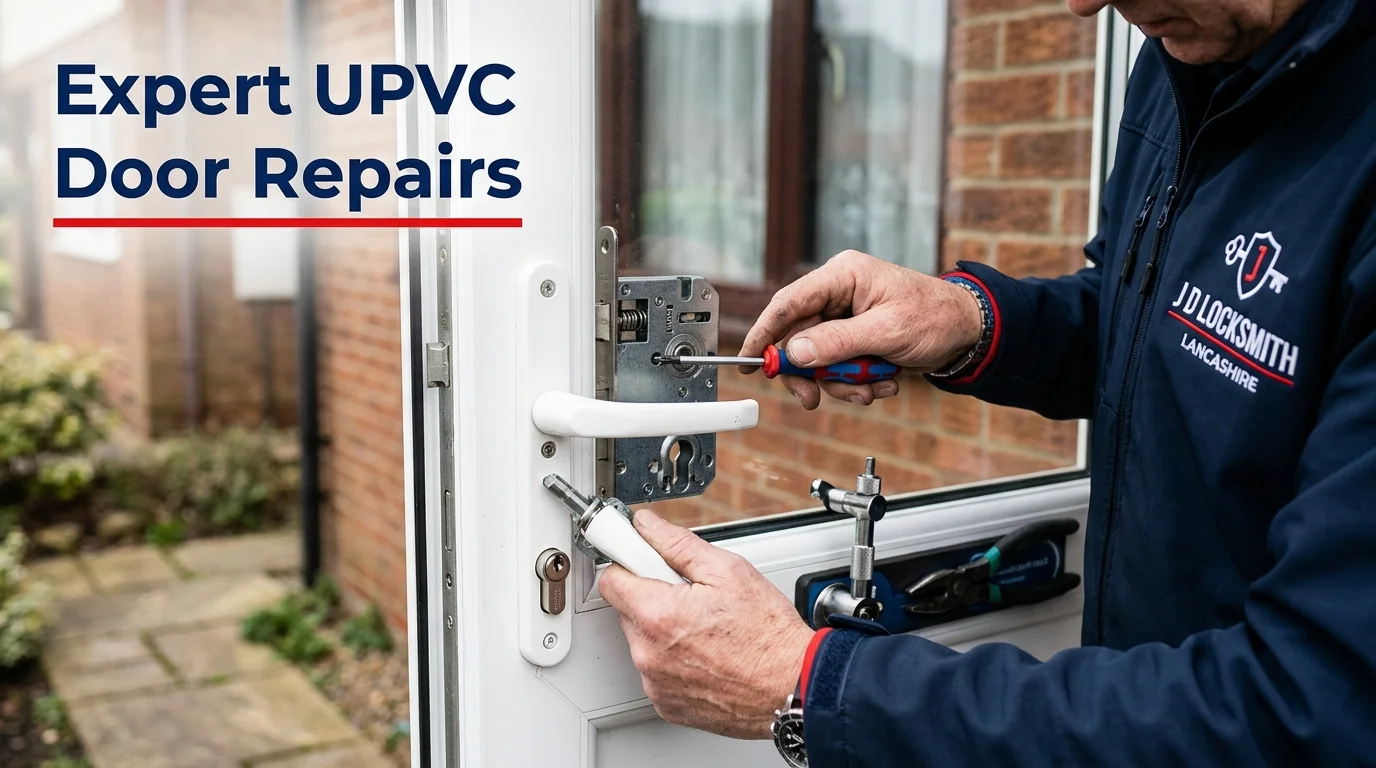
If your gearbox has failed, it needs to be replaced professionally. The door needs partial disassembly. The old mechanism needs to be removed carefully. The new one must be fitted and adjusted correctly. Get this wrong, and you’ll have bigger problems.
Major Adjustments
While minor hinge adjustments might be within DIY capabilities, major realignment needs expertise. Professional door fitters know exactly how to adjust all three planes to get the door hanging perfectly.
Cylinder Upgrades
If you’re upgrading to anti-snap cylinders or British Standard cylinders, get them fitted properly. These provide your main security. They need to be the correct length, fitted correctly, and tested thoroughly.
For expert help with UPVC door repairs in Lancaster and surrounding areas, professional locksmiths carry parts for most common UPVC systems and can usually repair problems the same day.
Frequently Asked Questions
Why do UPVC doors fail so often?
UPVC doors don’t actually fail more often than other door types, but when they do, the failure is more noticeable because the whole locking system is affected. The multipoint mechanism has more moving parts than a simple lock. Each part could fail. Lancashire’s damp climate can accelerate wear on metal components. Temperature changes cause expansion and contraction. Most UPVC door problems are actually maintenance issues. Regular lubrication and adjustment prevent most failures.
Can I fix UPVC door problems myself?
Some UPVC door problems are suitable for DIY if you’re reasonably handy. Lubricating mechanisms, tightening loose handles, and minor hinge adjustments are manageable. But replacing mechanisms, making major adjustments, and upgrading cylinders require professional expertise. Getting these wrong can make problems worse or create security vulnerabilities. If you’re not confident, professional help costs less than repairing botched DIY attempts.
How long should a UPVC door mechanism last?
A well-maintained UPVC door mechanism should last at least 10-15 years. I’ve seen some over the last 20+ years. But this depends entirely on maintenance and use. Doors that are operated multiple times daily wear faster. Mechanisms that are never lubricated fail sooner. Doors that have dropped and are operating under stress won’t last as long. Regular maintenance significantly extends the mechanism’s life.
How much does it cost to repair a UPVC door?
Costs vary depending on what’s wrong. Simple adjustments usually cost £65-95 during normal hours. Handle replacement costs £80-120, including parts. Cylinder replacement costs £70-150, depending on the cylinder type. Full mechanism replacement typically costs £150-250, including parts and labour. These prices reflect Lancashire rates. Emergency callouts cost more. But repairing problems early is always cheaper than waiting until something breaks completely.
Why won’t my UPVC door lock in cold weather?
Cold weather affects UPVC doors in several ways. The UPVC material itself contracts slightly in cold temperatures. This can change alignment enough to affect locking. Moisture can freeze inside the mechanism. Metal parts contract at different rates. If your door only has problems in cold weather, it’s usually an alignment issue. The door needs to be adjusted to account for seasonal changes. Or the mechanism needs better lubrication with a cold-weather appropriate lubricant.
Is it worth repairing an old UPVC door, or should I replace it?
This depends on the door’s age and condition. If the door is less than 10-15 years old and only the mechanism has failed, repair makes sense. Replacing the mechanism is far cheaper than installing a new door. If the door itself is damaged, warped, or the frame is failing, replacement might be more cost-effective. Also consider security. If you’re upgrading to meet modern standards anyway, a new door might make sense. Professional assessment can help you decide.
Don’t Let UPVC Door Problems Compromise Your Security
UPVC door problems are frustrating. When your main door won’t lock properly, it affects your whole day. You worry about security. You worry about getting locked out. You worry about the cost of repairs.
But most UPVC door problems follow predictable patterns. The mechanisms fail in similar ways. The solutions are well established. And caught early, most problems are straightforward to fix.
What separates a minor repair from a major failure is usually timing. Deal with a stiff handle now, and you’ll pay for simple lubrication or adjustment. Ignore it until the mechanism breaks, and you’re paying for an emergency callout and a full replacement.
I’ve spent years repairing UPVC doors across Lancashire. The homeowners with the fewest problems are those who pay attention to their doors. They notice when something feels different. They get small issues checked. They keep up with basic maintenance.
The homeowners who face expensive emergencies are usually the ones who ignored warning signs. The stiff handle that they forced for six months. The key became gradually harder to turn. The door that scraped for so long, they stopped noticing.
If your UPVC door isn’t working quite right, don’t wait for it to fail. Call me on 07845 08 66 31 for professional assessment and repair.
I’m Dan Collins, your local locksmith covering Barnoldswick, Colne, and all of Lancashire and Yorkshire. I carry parts for the most common UPVC systems. I can diagnose and repair UPVC door problems on the first visit.
Your UPVC door is your home’s main security feature. Make sure it’s working properly. Don’t compromise your family’s safety by ignoring problems that will only get worse.