
Spring Home Security Checklist: Protect Your Lancashire Home (2026)
You’re planning your spring cleaning right now. You’ll wash windows, clear gutters, and sort through cupboards. But most Lancashire homeowners forget one important thing during spring cleaning: checking their home security.
Every spring, I get calls from homeowners who find security problems at the worst time. Someone tries to lock up before their Easter holiday. They find their UPVC door won’t lock. Another person opens their garden shed for the first time since October. The lock has rusted through over winter. A family in Skipton tries their back door. The lock has seized completely after months of cold weather.
These aren’t break-ins. They’re simple maintenance issues that became security problems. They went unchecked through winter.

I’m Dan Collins. I’ve been helping homeowners in Lancashire and Yorkshire secure their properties for years. Spring is the best time to check your home security. I’m going to show you exactly what to check, why it matters, and what to do about problems.
This isn’t just another generic security checklist. This comes from the actual security failures I see every spring in Lancashire. These are the fixes that actually work in our climate.
Why Spring Security Checks Matter
Spring isn’t randomly chosen for security checks. There are specific reasons why this timing matters for Lancashire homes.
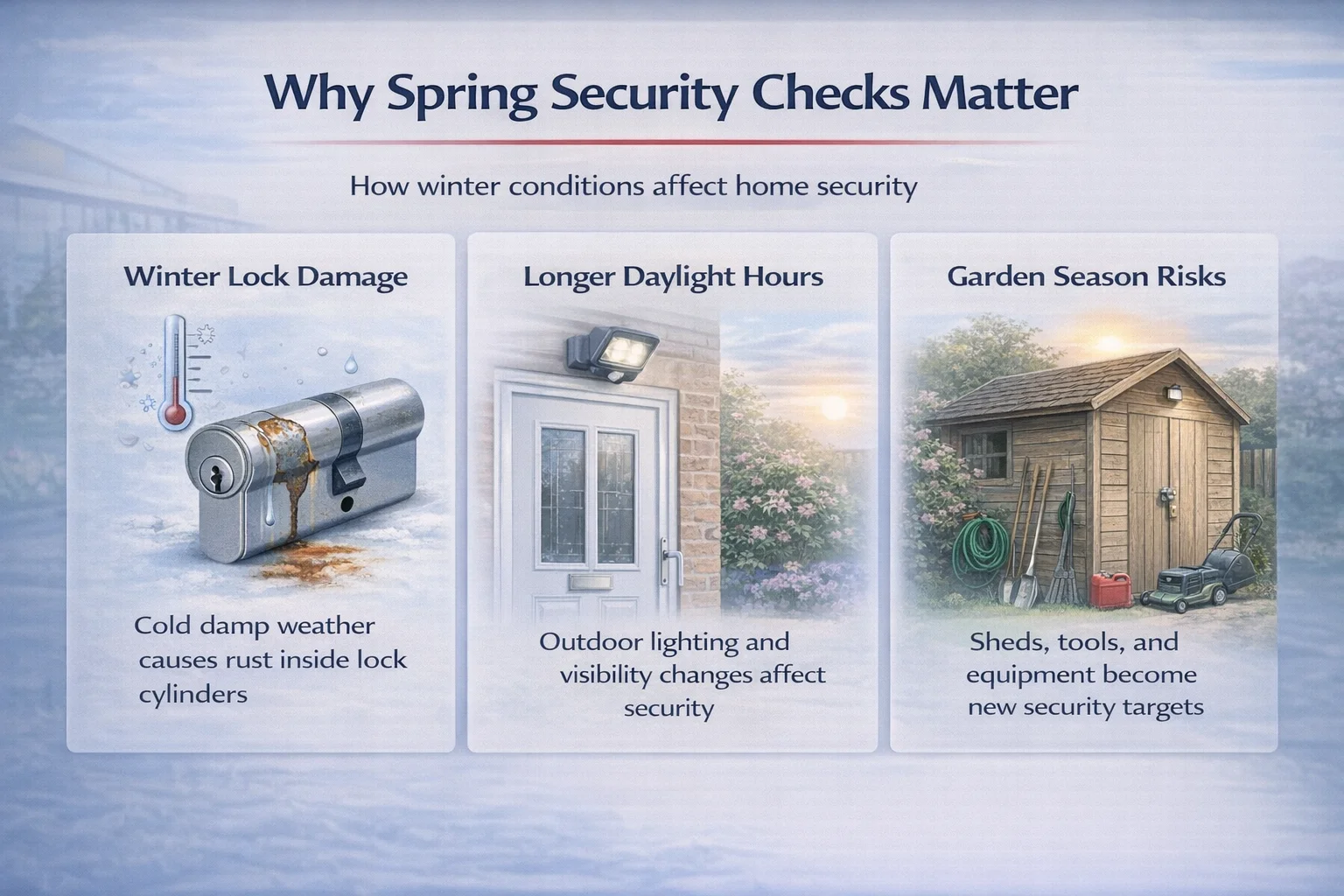
Winter Damages Your Locks
Lancashire winters are damp and cold. This combination is bad for metal lock parts. Water gets into mechanisms. It sits there for months. Metal parts rust. The oil inside the locks thickens and becomes useless. Springs get weak from temperature changes.
I’ve removed lots of seized lock cylinders in April and May. They worked fine in October. The homeowners didn’t know anything was wrong. They only found out when they tried to use the lock after months.
Longer Days Change Your Security Needs
The clocks change and evenings stay lighter. Your home security needs change, too. That sensor light that lit your driveway at 5 PM in January now turns on in broad daylight. It might not work during the hours you actually need it. Curtains that kept your home private in winter darkness now leave everything visible from the street at 8 PM.
Burglars know about seasonal changes. They adapt faster than homeowners do. They know which homes haven’t updated their security for the new daylight hours.
Garden Season Creates New Problems
Spring means you’re opening sheds. You’re using garden furniture. You’re storing expensive lawn equipment. You’re leaving tools around. Each of these creates either a new theft target or a tool burglars could use to break into your home.
Last April, I helped a family in Burnley. Their garage had been broken into to steal garden tools. The thieves then used those same tools to break in through a back window. A £15 padlock and a quick security check could have prevented the whole thing.
Holiday Planning Creates Urgency
Easter holidays and early summer trips mean many Lancashire families will soon leave their homes empty. Finding out your door won’t lock properly on the morning you’re supposed to leave for the airport creates stress. It means an expensive emergency locksmith call.
It’s much better to find and fix these problems now. Do it during normal business hours. Do it when you’re not panicking about missing a flight.
Check Your Doors First
Most break-ins happen through doors. Let’s start there.
Your Front Door Needs Testing
Your front door gets used constantly through winter. This means thousands of lock cycles in harsh conditions. Walk up to your front door like you’re coming home. Do this check:
Put your key in and turn it. Does it turn smoothly? Or is there resistance? Resistance means problems are developing inside. Does the key slide in easily? Or does it catch? Catching means the cylinder is wearing out or has dirt inside.
Lock and unlock your door three times in a row. By the third time, problems that aren’t obvious on the first try often show up. If the mechanism gets stiffer each time, your lock needs work or replacement.
Look at the door frame around the strike plate. Look for wood that’s splitting. Look for screws that are coming loose. Look for gaps that have opened up. Winter’s temperature fluctuations can weaken frame strength. Even a good lock won’t work well if the frame is damaged.
For UPVC doors—and these are very common in Lancashire—lift the handle and lock the door. Does every locking point engage smoothly? I often find UPVC mechanisms where one or two locking points have failed. But the door still appears to lock. This gives you a false sense of security while leaving your home at risk.
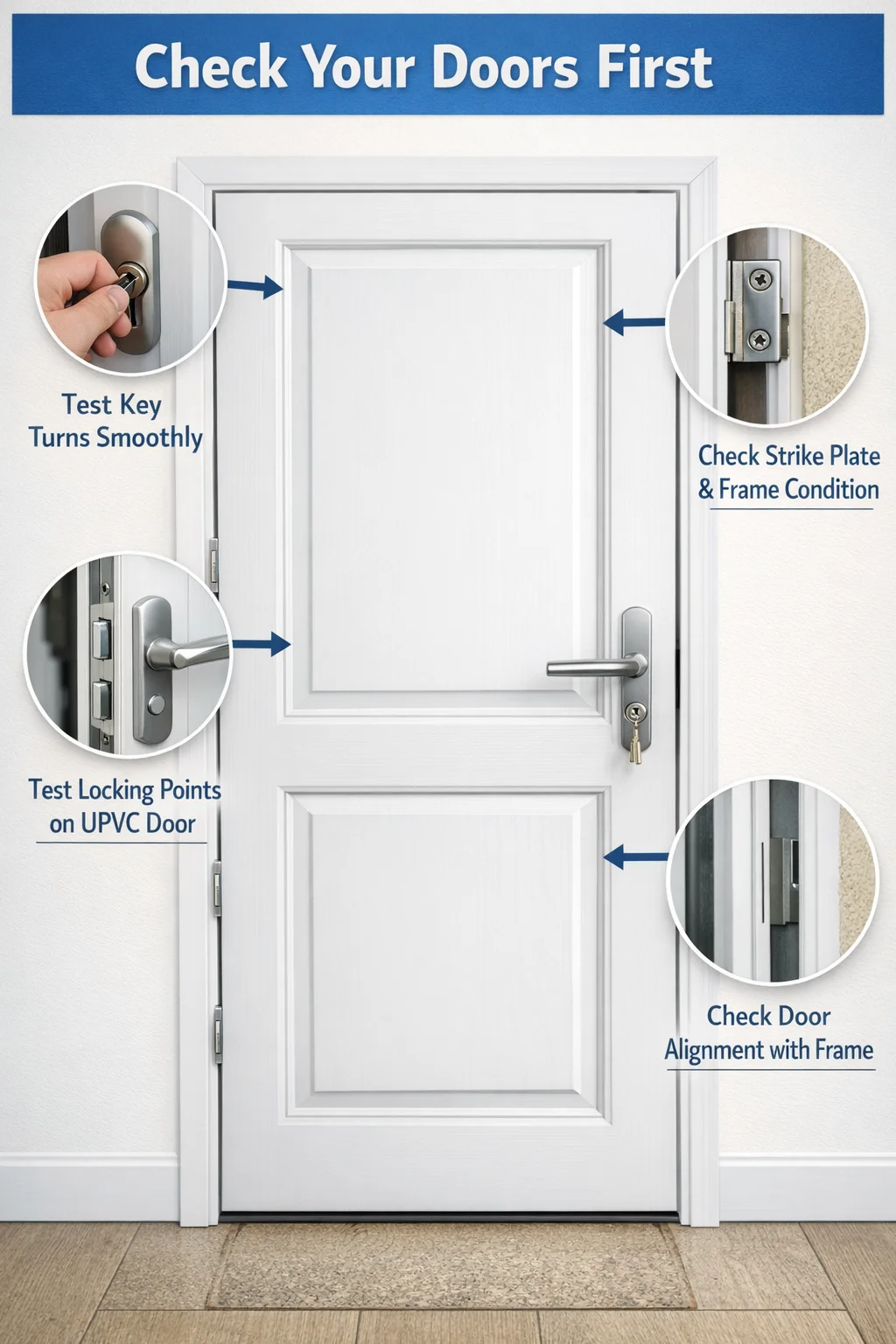
Testing your door lock each spring helps prevent unexpected failures.
Back and Side Doors Get Forgotten
These doors get less attention. But they often pose bigger security risks. They’re less visible to neighbors and people passing by. Many Lancashire homes have back doors that haven’t been properly checked in years.
Test every lock. Back doors often have multiple locks. A main lock, a deadbolt, maybe a top bolt. Make sure they all work correctly. I’ve found many situations where homeowners only used the main lock. They didn’t know their deadbolt had seized completely months earlier.
Check that the door is properly aligned. Doors shift in their frames over winter. If your door now scrapes the frame when closing, the lock might not line up with the strike plate. This poor alignment can leave the locking points only partially engaged. It feels locked, but won’t resist someone trying to force the door.
Look at the bottom of the door for weather damage. Lancashire’s wet winters make wood swell and rot. If your door bottom has rotted, it might provide an easy way in. This is true no matter how good your locks are.
Patio and Conservatory Doors Need Special Care
Sliding doors and French doors have unique security challenges. Winter weather often makes these worse.
For sliding patio doors, test the lock when the door is open and when it’s closed. Sliding door locks often fail in a way that only shows up in one position. Check that the door can’t be lifted out of its track. This is a common security problem in older doors.
French doors should be checked on both the active and passive doors. The passive door is the one that usually stays closed. It usually has top and bottom bolts. Make sure these bolts actually go into the frame properly. I’ve found many French doors with these bolts painted over or so rusted that they’re useless.
For professional door security services, including lock upgrades and repairs, experts can find problems you might miss.
Don’t Forget Your Windows
Windows are often forgotten in security checks. Yet they’re a big weakness in most homes.
Ground Floor Windows Come First
Any window you can reach from ground level needs a working lock. This sounds obvious. But you’d be surprised how many Lancashire homes have ground-floor windows with broken locks, painted-over locks, or no locks at all.
Open and close each ground-floor window. Make sure the lock works properly. Many window locks slowly fail over time. They’ll close but won’t actually secure. Test this by trying to push the window open while it’s “locked.” It should not move at all.
Look at window frames for rot or damage. Wooden window frames break down from Lancashire’s damp winters. Damaged frames won’t support locks well. This is true even if the locks themselves work fine.
Think about whether your window locks meet insurance requirements. Many insurance policies require British Standard locks for ground-floor windows. If you’re not sure whether your locks qualify, this spring check is the perfect time to find out and upgrade if needed.
First Floor Windows Still Matter
First-floor windows aren’t at ground level. But they’re not safe from security concerns. Burglars can use bins, garden furniture, conservatory roofs, or sheds to reach first-floor windows.
Check any first-floor window you can reach via flat roof, extension, or nearby structure. These windows should have the same quality locks as ground-floor windows. I’ve seen break-ins where thieves targeted first-floor bathroom windows. They knew these often don’t have proper locks.
For help with window lock repairs and upgrades, professional locksmiths can suggest the right solutions for your window types.
Check Garden Buildings and Outdoor Areas
Spring marks the start of the garden season. This creates new security issues.
Sheds and Garages Store Valuable Things
Garden sheds aren’t just storage. They’re often filled with hundreds or thousands of pounds worth of equipment. Lawn mowers, pressure washers, bicycles, tools, and garden furniture all make good targets for thieves.
Check your shed lock. If it’s a basic hasp-and-padlock setup, make sure the hasp is still securely attached. Winter weather can loosen screws and rust fixings. Test the padlock. Make sure the key turns smoothly, and the lock opens properly.
Many older sheds use locks that provide almost no real security. If your shed lock is flimsy and could be broken with a screwdriver in thirty seconds, you need to upgrade. Get a proper closed-shackle padlock and a reinforced hasp this spring.
Think about what’s actually in your shed. If you’re keeping an £800 lawnmower in there, a £12 padlock isn’t enough protection. Your security should match the value of what you’re protecting.
Garage security needs the same attention. Side doors on garages are often of poor quality with weak locks. If your garage has a vehicle, tools, or access to your house, it needs better security than most garages get.
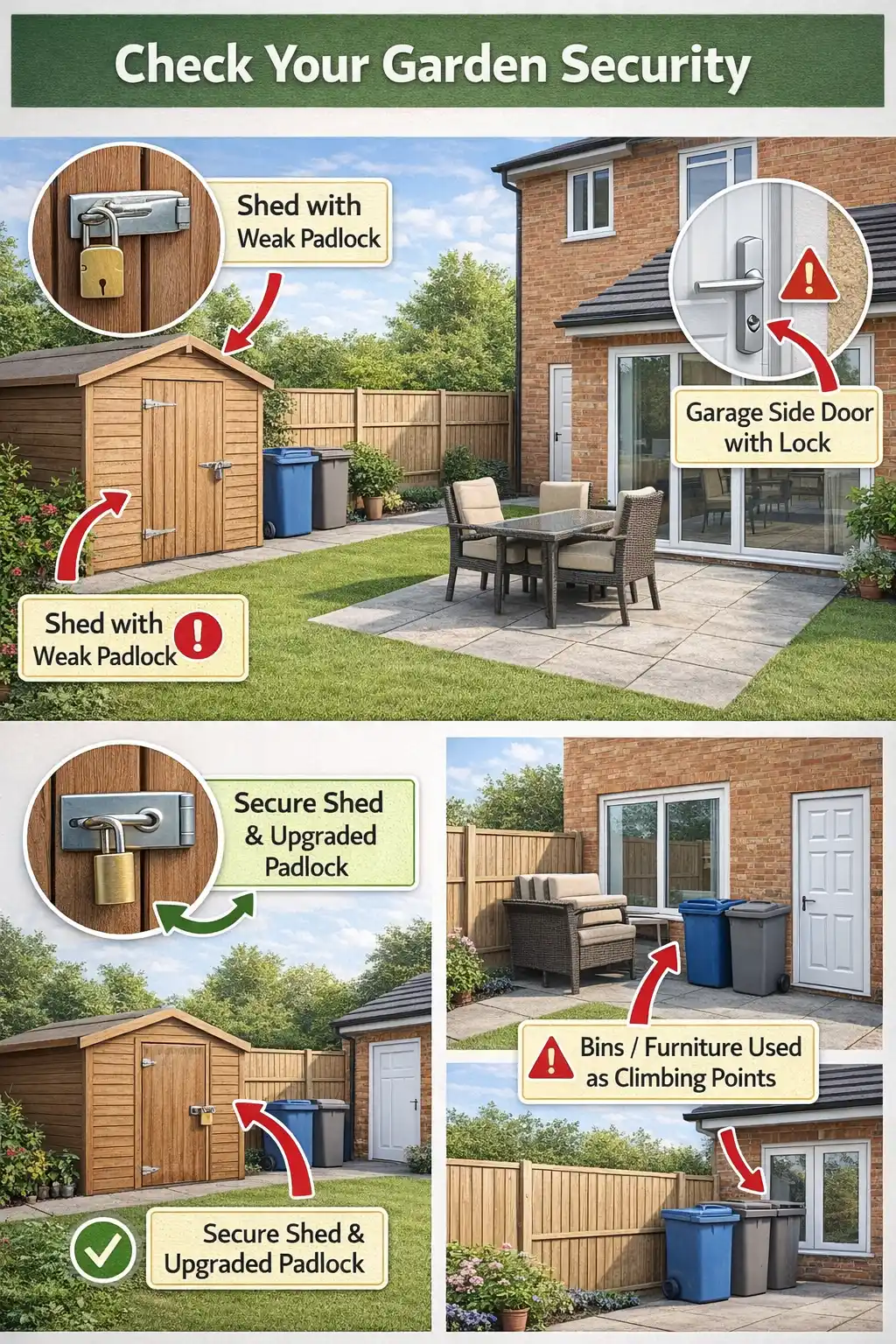
Garden furniture, sheds, and tools can create security risks in spring.
Garden Furniture and Equipment Can Help Burglars
Once garden furniture comes out of storage, it can actually hurt your home security. It’s not just a theft target itself.
Look at your garden from a burglar’s point of view. Could your garden furniture be moved and used to reach the first-floor windows? Could your bins give someone a step up to your conservatory roof? Is there anything in your garden that gives burglars a way to climb?
I helped a family in Lancaster whose patio table had been stacked with chairs. It was used to reach a first-floor window that was left open. The burglars didn’t bring a ladder. They used the homeowner’s own furniture.
Secure or store anything that could be used for climbing. This includes bins, furniture, plant pots, and garden decorations. If something can’t be secured, at least put it away from the house where it can’t help someone climb up.
Update Your Technology and Lighting
Your home’s security technology needs spring adjustments to keep working well.
Sensor Lights Need New Settings
Motion sensor lights put up in winter might now turn on in daylight. Or they may fail to light up when you need them. Walk around your property at dusk. Check that sensor lights turn on when you approach entry points.
Adjust the sensitivity if lights are turning on too often due to animals or passing traffic. Constantly on lights become background noise. Neighbors ignore them. This defeats their purpose as a warning and alert system.
Replace bulbs that burned out over winter. A sensor light with a dead bulb gives you zero security benefit.
CCTV and Alarm Systems Need Care
If you have CCTV cameras, clean the lenses. Lancashire’s damp weather leaves residue and condensation. This can significantly degrade image quality. Check that cameras still cover the areas you need. Tree growth over winter might have created blind spots.
Test your alarm system if you have one. Set it and trigger it on purpose. Make sure it’s working correctly. Many alarm systems develop problems that go unnoticed. People set them out of habit without ever checking if they actually work.
What to Do About Problems You Find
Finding security problems doesn’t help unless you fix them.
Problems That Need Professional Help Right Away
Some security issues can’t wait. If you find any of these problems during your spring security check, contact a professional locksmith:
Your main door lock is stiff, catches, or needs force to work. This means it’s about to fail. Better to replace it on your schedule than to have it fail at midnight. Your UPVC door won’t lock properly, or the locking system isn’t working smoothly. These systems are complex. DIY fixes often make problems worse.
Any lock that’s actually broken or doesn’t work at all. This obviously needs quick attention. But I’m surprised by how many people stop using a broken lock rather than getting it fixed.
For emergency locksmith services in Skipton and throughout Lancashire, professional help is available 24/7 when you find urgent security problems.
Problems You Can Fix Yourself
Not every security job needs a professional. These spring security tasks are things most homeowners can do:
Apply lubricant to locks using the proper lock lubricant. Don’t use WD-40. It actually attracts dirt and can mess up the mechanism. Use graphite powder or a specific lock lubricant from hardware stores.
Tighten loose screws on strike plates, door handles, and hinges. Winter’s temperature changes loosen fixings throughout your home. A few minutes with a screwdriver stops small problems from becoming big ones.
Replace basic padlocks and hasps on sheds and gates. This simple DIY really improves security.
Adjust sensor light position and sensitivity. Most systems have easy adjustment controls.
Upgrades Worth Doing This Spring
Beyond fixing immediate problems, spring is a good time to make security upgrades:
Upgrade to British Standard locks if you don’t have them now. This often reduces insurance costs and really improves security. Put in a key safe so you always have backup access. This prevents lockouts and eliminates the need to hide keys under plant pots.
Add window locks to any windows that don’t have them. Ground-floor windows, especially, should all have working locks.
Professional security sweep services can find weak spots you might miss and suggest the right improvements.
The Final Check Before the Holiday
If you’re planning Easter holidays or early summer trips, do one more security check right before you leave.
Walk through your whole home and actually test every lock. Don’t just turn keys. Try to push doors and windows open while locked. Make sure they’re really secured.
Check that windows are closed and locked, not just closed. A closed but unlocked window is often worse than an open one. It creates false security.
Make sure sheds and garages are properly locked. Holiday times are prime time for garden equipment theft. Burglars know homeowners are away.
If you find a security problem the day before leaving, don’t ignore it and hope for the best. Contact a locksmith right away. I’ve helped many families who found UPVC door problems at the last minute, just before the holidays. It’s fixable, but only if you don’t leave it until you’re walking out the door.
For fast response throughout Lancashire, including Burnley, Nelson, and surrounding areas, professional locksmiths can fix pre-holiday security emergencies.
Common Questions About Spring Security
When should I perform a Spring Security check?
Early March through April works best for spring home security checks in Lancashire. This timing lets you find and fix problems before the Easter holidays, when many families travel. Checking in early March means you can schedule repairs during normal hours. You don’t need emergency services. You finish maintenance before you start leaving windows open or using garden areas regularly.
How long does a home security check take?
A complete spring security check of an average home takes about 60-90 minutes if you do it carefully. This includes testing all doors and windows, checking sheds, and looking at outdoor lighting. Make notes of issues that need fixing. Don’t rush this. The point is to find problems before they become emergencies. You can break the check into two sessions. Do indoor one day, outdoor the next. This makes the task easier.
Should I replace locks that still work but are old?
Whether to replace locks depends on several things beyond just whether they work now. Think about replacing locks that are 10+ years old, especially on main doors. Internal parts wear out even with normal use. Replace locks if you’ve had key problems, such as sticking or difficulty turning, even if it’s only occasionally. These show developing failures. Definitely replace locks if they don’t meet British Standard requirements. This is especially true if your insurance requires it. But well-maintained quality locks can last 15-20 years. Age alone doesn’t mean replacement is needed.
What’s the most common Spring Security problem?
UPVC door locking systems that broke down over winter are by far the most common spring security problem I see in Lancashire homes. The locking system works. But one or more locking points have actually failed. This leaves the door unsecured. Homeowners often don’t know there’s a problem because the door feels locked. The second most common issue is seized or rusted window locks that haven’t been opened since autumn. People find they can’t actually open windows for the spring air because the locks have rusted shut.
Do I really need to check windows if I have door locks?
Yes, absolutely. Many burglaries in Lancashire happen through windows rather than doors. This is especially true for ground-floor windows at the back of properties. They’re less visible to neighbors. Statistics show that about 23% of home break-ins involve entry through windows. Even if you have excellent door security, weak windows completely undermine your home security. Ground floor windows, windows you can reach from the conservatory or garage roofs, and any window visible from alleyways or hidden areas all need working locks.
How much should Spring Security maintenance cost?
Budget expectations vary a lot based on what you find during your check. If you only need lubricant and minor adjustments, £20-30 covers supplies for DIY work. If you need professional lock servicing or adjustments, expect £65-95 per visit during normal hours. Lock replacements range from £80 to £150 per lock, depending on the type and quality. UPVC mechanism repairs or replacements typically cost £120-200. For complete security upgrades, including multiple locks, window locks, and potentially smart locks, budget £300-600. But investing in proper security now prevents costly emergency calls and potential burglary losses later.
Make Spring Count for Your Security
Spring home security isn’t about being paranoid or spending lots of money. It’s about regular maintenance that prevents problems before they become emergencies or actual security breaches.
The locks and security features protecting your Lancashire home have worked hard through winter. Damp, cold, and constant use wear down metal parts. Spring is when those problems often show up as failures.
Taking two hours on a Sunday afternoon to check your doors, windows, and sheds could prevent a lockout. It could stop a pre-holiday emergency. It makes your home more resistant to break-in attempts.
Most of what I’ve explained here needs no special tools, costs nothing, and needs your time and attention. The problems you find might need professional help. But finding them is the important first step.
Every spring, I help dozens of Lancashire homeowners who wish they’d found security problems earlier. The person was locked out the day before their holiday. The family whose garden equipment was stolen because the shed lock had rusted. The homeowner whose UPVC door failed while leaving for work. All of these situations could have been prevented with a spring security check.
Don’t wait for a security problem to show up at the worst time. If you find issues during your spring security check, or if you want a professional assessment of your home’s security, call me on 07845 08 66 31.
I’m Dan Collins, your local locksmith serving Lancashire and Yorkshire. I’ve spent years helping homeowners properly secure their properties. I’m available 24/7 to provide professional help.
Spring cleaning your home security isn’t just good practice; it’s essential. It’s essential maintenance that protects your family and your property. Make it part of your seasonal routine. You’ll never face an emergency security situation at the worst possible time.