
Post-Winter Lock Check: Essential Maintenance for Settle Homes After Harsh Yorkshire Weather
Post-Winter Lock Check: Essential Maintenance for Settle Homes After Harsh Yorkshire Weather
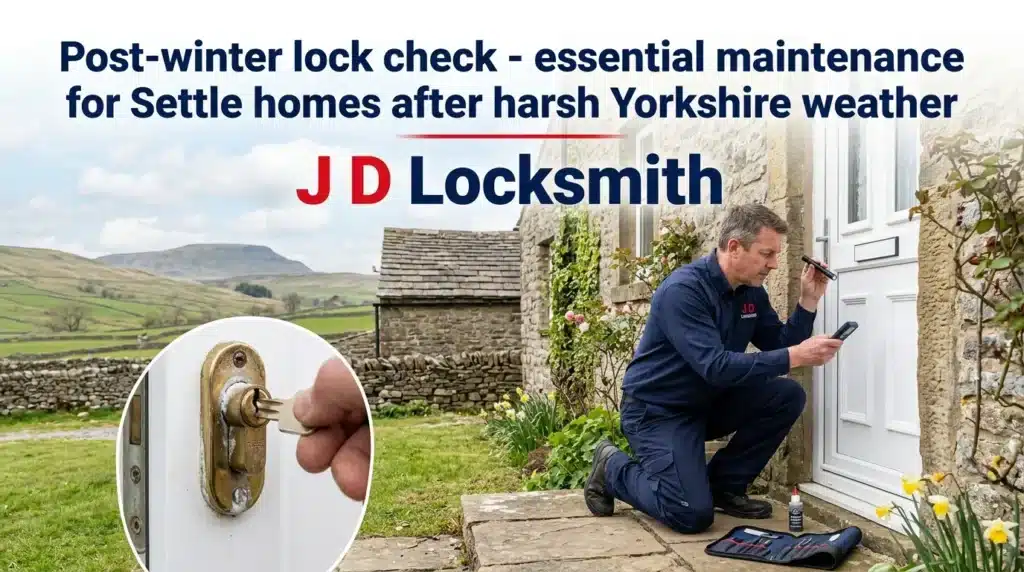
May arrives in Settle, and you notice something. Your front door key doesn’t turn as easily as it did last autumn. The UPVC door handle feels stiffer when you lift it. Your back door scrapes the frame slightly when you close it.
These aren’t random problems. The winter damage is showing up now that you’re using your doors normally again.
I’m Dan Collins from J D Locksmith, and every May, I see the same pattern across Settle and the Yorkshire Dales. Winter freezes, thaws, contracts, and expands everything. Metal parts in locks get stressed. Moisture gets inside the mechanisms. Doors shift in frames. By May, the damage becomes obvious.
The problem? Most Settle homeowners don’t connect these issues to winter weather. They assume locks wear out randomly. They don’t realize that harsh Yorkshire winters, especially in exposed areas like Settle, cause specific, predictable damage.
Lock maintenance after winter in Settle isn’t optional. It’s essential for prevention. Address problems in May to prevent lockouts in June. Ignore them, and you’ll be calling emergency locksmiths during your summer holiday.
This guide shows you exactly what winter does to locks in Settle homes. What to check this May. What needs fixing versus what needs maintenance. How to prevent next winter’s damage.
Why Settle's Winter Is Particularly Hard on Locks
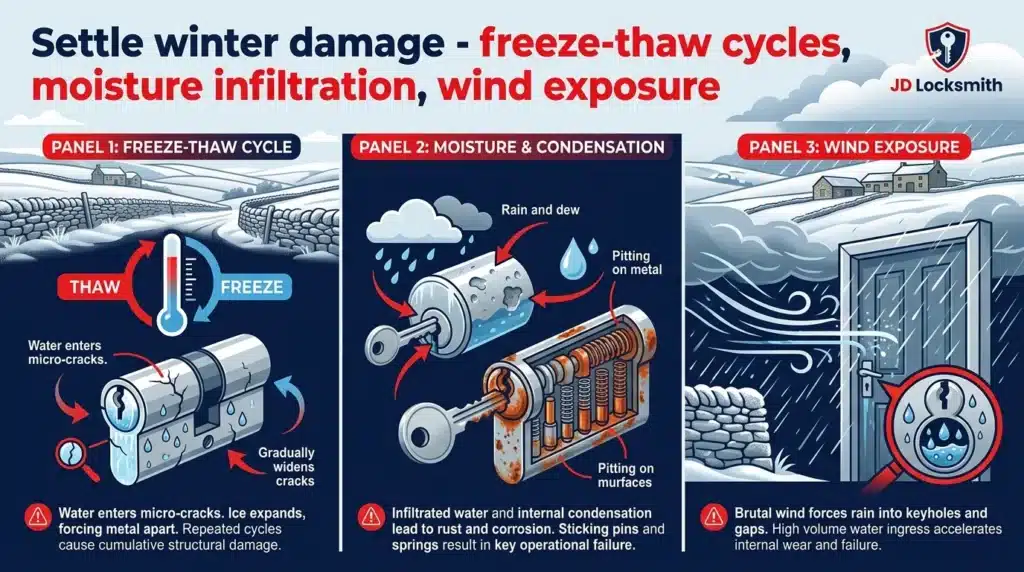
Settle sits in the Yorkshire Dales, exposed to harsh weather. Winter here isn’t like winter in sheltered towns. Your locks are exposed to conditions that cause genuine damage.
Temperature Swings in the Dales
Settle experiences dramatic temperature changes during winter. Freezing nights followed by milder days. This constant freeze-thaw cycle stresses every metal component in your locks.
Metal contracts when cold. It expands when warming. Do this repeatedly over four months, and metal parts develop stress. Springs weaken. Cylinders develop internal wear. Moving parts don’t move as smoothly.
By May, you notice the accumulated damage. Keys turn with more resistance. Mechanisms feel different. What worked perfectly in October struggles in May.
Moisture and Condensation
Yorkshire winters bring rain, snow, and constant dampness. Water gets into lock mechanisms through tiny gaps. Once inside, it causes problems.
Water in cylinders leads to corrosion. Metal parts rust. Springs corrode and weaken. The moisture also attracts dirt and debris that wouldn’t normally enter the mechanism.
UPVC door mechanisms are particularly prone to moisture damage. The multipoint locking system has many moving parts. Water in these mechanisms causes grinding, stiffness, and eventual failure.
Wind Exposure in Settle
Settle’s position means significant wind exposure during winter storms. Wind-driven rain forces water into places it wouldn’t normally reach. Door seals get tested under constant pressure.
This wind also causes doors to move slightly in frames over winter. Repeated stress from wind pressure can cause doors to drop or shift. By May, alignment problems become apparent.
Why May Is When You Notice
During winter, you’re often in survival mode. Doors work well enough. You’re focused on heating and staying warm. Small changes go unnoticed.
May is when normal door use resumes. You’re in and out of the garden more. You’re opening windows. You’re using doors that stayed closed all winter. That’s when accumulated winter damage becomes obvious.
What Winter Actually Does to Different Lock Types
Different locks are affected by different types of winter damage. Understanding what happened helps you know what to check.
UPVC Door Mechanisms
UPVC doors have the most complex systems and therefore the most potential problems. The multipoint locking mechanism features springs, cams, locking points, and moving parts.
Winter moisture gets into these mechanisms. Springs corrode and lose tension. Locking points stick. The gearbox develops resistance. By May, lifting the handle feels noticeably different.
Temperature changes also affect UPVC door frames themselves. The material expands and contracts. This can throw alignment off slightly. Even small misalignment stresses the mechanism when you operate it.
Cylinder Locks
Cylinders in any door are affected by winter moisture. Water enters through the keyway. Once inside, it can freeze overnight. This freeze-thaw cycle damages the pin mechanisms inside.
Corrosion develops on pins and springs. Keys that turned smoothly in autumn now feel gritty or sticky. In severe cases, cylinders can completely seize.
Cylinders on exposed doors are more likely to be damaged than those on sheltered doors. Your front door probably suffered more than your back door if it faces prevailing weather.
Yale-Type Rim Locks
Traditional Yale locks on wooden doors also take winter punishment. The cylinder can corrode. The latch mechanism inside can develop rust. Springs weaken from repeated stress.
These locks often show problems as keys become harder to turn. Or the latch not springing back properly. You should help the latch return with your finger.
Wooden Door Mortice Locks
Mortice locks sit at the edge of the door. They’re somewhat protected from the weather. But they still suffer from condensation and temperature changes.
The bolt mechanism can develop rust. The key bit can accumulate corrosion. By May, you might notice the key takes more force to turn. Or the bolt doesn’t slide as smoothly.
Your Complete Post-Winter Lock Inspection

This May, work through your Settle home systematically. Check every external door and lock. Here’s exactly what to look for.
Front Door Inspection
Start with your front door since it gets the most use. Close the door and try to push it. Does it feel solid or does it move slightly? Movement suggests dropped hinges or frame issues.
Insert your key and turn it. Does it turn smoothly, or does it feel sticky? Stickiness indicates cylinder problems. Grinding sounds mean internal corrosion.
For UPVC doors, fully lift the handle. Does it lift smoothly, or does it catch? Do you feel all the locking points engaging? Listen for grinding or clicking that sounds different than usual.
Lock and unlock the door completely several times. Each operation should feel identical. If some operations feel different, something’s wrong.
Back Door Assessment
Repeat the same process for your back door. Back doors often suffer more because they’re used less frequently during winter. Problems develop unnoticed.
Check if the door scrapes the frame when opening or closing. Scraping indicates the door has dropped. This needs to be addressed before it damages the mechanism.
Test the handle and key operation. Back door mechanisms often become stiffer due to infrequent use and exposure to the elements.
Side Doors and Utility Doors
Don’t forget utility room doors, side doors, or any other external access point. These are often the worst for winter damage because they’re least used.
Locks on rarely-used doors can seize completely over winter. Test them now while there’s no urgency. Finding a seized lock in May is fine. Discovering it when you’re trying to leave for a holiday in July is not fine.
Garage and Shed Locks
Check the garage and shed padlocks, too. These face full weather exposure. Padlocks can rust, corrode, and seize over winter.
Try opening each padlock. Does the key insert easily? Does it turn smoothly? Does the shackle release properly? Stiffness now means replacement soon.
For professional door and lock maintenance in Settle and throughout the Dales, experienced locksmiths can assess winter damage and recommend appropriate action.
Simple Maintenance You Can Do Yourself
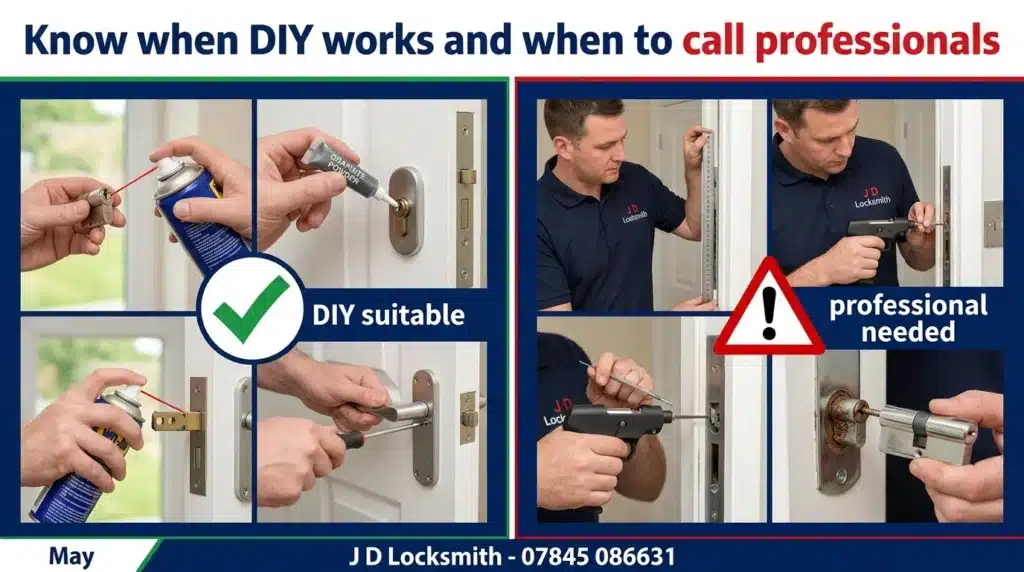
Some post-winter lock maintenance is straightforward DIY. You can address these issues yourself with basic materials.
Cleaning Cylinders
Cylinders accumulate dirt and moisture over winter. Cleaning them helps restore smooth operation.
Use compressed air to blow debris out of the keyway. Don’t use water or oil-based cleaners. These can make problems worse by attracting more dirt.
After cleaning, apply graphite powder to the cylinder. Insert your key and work it in and out several times. The graphite lubricates internal pins without attracting dirt.
Lubricating Mechanisms
UPVC door mechanisms benefit from proper lubrication after winter. But use the right lubricant.
Never use WD-40 or oil on lock mechanisms. These attract dirt and, over time, worsen things. Use dry lubricant or silicone spray instead.
Spray lubricant on all the locking points. Operate the handle several times to work it in. The mechanism should feel smoother immediately.
Adjusting Handles
Loose handles often develop over winter. The constant contraction and expansion can loosen screws.
Check the screws on both handles. Tighten any that have worked loose. Don’t over-tighten as this can strip threads or damage handles.
If handles still feel loose after tightening screws, the spindle might be worn. This needs professional replacement.
Door Alignment Checks
Check if doors hang square in frames. Close the door and look at the gaps around all edges. Gaps should be even on all sides.
Uneven gaps indicate the door has dropped or shifted. Minor issues can sometimes be fixed by adjusting hinges. Significant drops need professional attention.
For UPVC doors, adjustable hinges allow for height, lateral, and compression adjustment. But adjustment requires knowing which screws do what. If you’re uncertain, get professional help rather than making things worse.
When DIY Maintenance Isn't Enough
Some winter damage needs professional locksmith attention. Knowing when to call for help prevents problems from getting worse.
Cylinder Replacement Signs
If your cylinder still feels sticky after cleaning and lubricating, internal damage has occurred. Corroded pins or damaged springs need cylinder replacement.
Don’t keep forcing a damaged cylinder. You risk snapping your key inside. Replacement cylinders cost less than emergency extraction plus replacement.
Anti-snap cylinder upgrades make sense when replacing winter-damaged cylinders anyway. You’re already paying for replacement. Upgrade to better security at the same time.
Mechanism Failure Indicators
UPVC mechanisms that grind, catch, or feel inconsistent are probably damaged internally. Springs may have corroded. Gears might have stress damage. Locking points could be bent.
These problems won’t fix themselves. They’ll get worse. May is the time to replace failing mechanisms before they fail in the summer.
Complete Lock Replacements
Sometimes, winter damage is severe enough that complete lock replacement makes more sense than repair. This is particularly true for old locks that were already marginal.
If your locks are over 10 years old and showing winter damage, replacement is the smart choice. New locks provide better security anyway.
Professional Assessment Value
Even if you’re handy with DIY, a professional assessment has value after harsh winters. Locksmiths spot developing problems you might miss.
We can test mechanisms properly. We measure door alignment accurately. We identify problems that will cause failures in three months if not addressed now.
For comprehensive lock inspection in Skipton, Barnoldswick, and the Settle area, professional checks prevent summer emergencies.
Preventing Next Winter's Damage
While you’re thinking about lock maintenance this May, take steps to prevent similar damage next winter.
Pre-Winter Preparation
Before next winter arrives, service all locks properly. Clean cylinders. Lubricate mechanisms. Check door alignment. Fix any developing problems.
October is the ideal time for pre-winter lock maintenance. Get everything working perfectly before harsh weather arrives.
Weather Protection Improvements
Consider adding weather protection to exposed doors. Canopies or porches over front doors reduce direct weather exposure. Even small overhangs help.
Check and replace door seals if they’re worn. Good seals keep moisture out of mechanisms. This single improvement prevents significant winter damage.
Regular Winter Checks
During next winter, check locks monthly. A quick test of each lock identifies problems early. Deal with stiffness immediately rather than letting it develop.
Monthly checks take five minutes. But they prevent major problems from developing unnoticed for over 4 months.
Quality Lock Choices
When replacing locks, choose quality over price. Better locks withstand Yorkshire winters better. They have better seals, better materials, and better corrosion resistance.
Cheap locks might save money initially. But they fail faster in harsh conditions. Quality locks last longer and perform better.
Common Post-Winter Lock Problems in Settle
Living in Settle means specific types of lock problems after winter. Here are the most common issues I fix each May.
Dropped UPVC Doors
UPVC doors dropping over winter is extremely common in Settle. The freeze-thaw cycles stress hinges. The door gradually drops by a few millimeters.
This misaligns the multipoint locking mechanism. You can still lift the handle, but some points don’t engage properly. Or the whole mechanism feels forced.
Realignment requires properly adjusting the hinges. This brings the door back to the correct position. The mechanism then operates smoothly again.
Seized Cylinders
Cylinders seizing completely happen more in Settle than in sheltered areas. Water enters the cylinder. Freezes overnight. Thaws during the day. Repeat for weeks.
This freeze-thaw action damages internal pins. Eventually, the cylinder won’t turn at all. No amount of force will make it work.
Seized cylinders need replacement. Trying to force them risks snapping keys inside. Replacement takes 20 minutes and solves the problem completely.
Corroded Mechanisms
UPVC mechanisms with corrosion make grinding noises when you lift the handle. The locking points might stick. Some might not extend fully.
Internal springs have corroded. Gears have rust on them. The whole mechanism has deteriorated.
Corroded mechanisms need replacing. Lubrication helps temporarily, but corrosion continues to develop. Replacement prevents complete failure.
Warped Wooden Doors
Wooden doors can warp slightly over winter due to changes in moisture. This throws alignment off. The door no longer sits square in the frame.
Warped doors cause locks to bind. The bolt doesn’t slide smoothly into the keep. You have to lift or push the door to lock it.
Minor warping can sometimes be corrected. Severe warping means door replacement. A locksmith can assess which applies to your situation.
May Is the Perfect Time for Lock Maintenance
Timing matters for post-winter lock maintenance. May is ideal for several reasons.
Before Summer Holidays
June and July are prime holiday months. Yorkshire families leave for summer breaks. This is the worst time to discover lock problems.
Checking locks in May means finding and fixing problems before the holiday season. You won’t have emergency locksmith calls while trying to leave for a holiday.
Weather Allows Outdoor Work
May weather in Settle allows comfortable outdoor work. Locksmiths can work on external doors without fighting rain or cold.
Door adjustments sometimes require doors to be temporarily removed from hinges. May weather makes this practical. Winter weather makes it miserable.
Before Peak Summer Use
Summer means doors get more use in and out to gardens. Children playing. Doors are opening and closing constantly.
Addressing weak locks before this increased use prevents failures during peak usage. Fix problems now while use is still moderate.
Locksmith Availability
May is busy for locksmiths with house moves. But it’s not emergency-level busy. You can still get appointments reasonably quickly.
Wait until July, when everyone’s trying to leave for holiday, and you’ll struggle to get quick service.
Common Questions About Post-Winter Lock Maintenance
How do I know if my locks have winter damage?
Test each lock carefully. Stiffness, grinding, catching, or any operation that feels different from autumn indicates winter damage. Keys that turned smoothly in October but feel sticky in May have suffered corrosion. Mechanisms that operated freely but now feel resistant have internal damage. Trust your instincts. If it feels wrong, it probably is.
Can I prevent winter lock damage?
You can reduce it significantly. Pre-winter maintenance helps. Good quality locks withstand the weather better. Weather protection reduces exposure. But Settle’s harsh winter will affect locks regardless. The goal is to minimize damage, not prevent it completely. Annual maintenance cycles work better than expecting locks to be maintenance-free.
Should I lubricate locks myself?
Basic lubrication is fine for DIY. Use graphite powder for cylinders. Use dry lubricant or silicone spray for mechanisms. Never use WD-40 or oil. These attract dirt and worsen problems in the long term. If lubrication doesn’t improve operation, professional help is needed. Don’t keep adding lubricant, hoping it will eventually work.
How much does post-winter maintenance cost?
Costs depend on what needs doing. Simple cleaning and lubrication are inexpensive. Cylinder replacement costs moderate amounts. Full mechanism replacement costs more. Door realignment varies by complexity. Get a professional assessment to know exactly what you need. Most maintenance costs less than one emergency callout.
When should I replace rather than maintain?
Replace when maintenance won’t solve the problem. Corroded cylinders need replacing. Damaged mechanisms need replacing. Very old locks should be replaced rather than repeatedly maintained. If locks are over 10 years old and showing problems, replacement makes more sense. You get better security and reliability.
Do all Settle homes have winter lock damage?
Most Settle homes experience some winter lock effects. Extent varies by exposure, lock quality, and age. North-facing doors suffer more. Exposed properties suffer more. Older locks suffer more. But virtually every home in Settle has at least minor winter effects on locks by May.
Don't Wait Until Locks Fail Completely
Winter damage doesn’t fix itself. It gets worse. That stiff cylinder in May becomes a seized cylinder in July. That slightly sticky mechanism in May becomes a failed mechanism when you’re trying to leave for a holiday.
I’ve helped countless Settle homeowners who waited. They noticed problems in May. They thought they’d deal with it later. Then they faced emergencies at the worst possible times.
Everyone wished they’d addressed problems in May when there was no urgency.
Post-winter lock maintenance in May prevents summer emergencies. It’s that simple.
The work isn’t complicated. The costs are reasonable. The time required is minimal. But the value is enormous. You avoid lockouts. You avoid emergency callouts. You avoid holiday disruptions.
Settle’s harsh winters are hard on locks. That’s just reality. But smart maintenance prevents winter damage from becoming summer disasters.
Experiencing lock problems after winter in Settle? Call J D Locksmith on 07845 08 66 31 for a professional assessment and maintenance.
I’m Dan Collins, serving Settle and the rest of Yorkshire. I help homeowners maintain their locks properly after harsh winters.
I’ll assess the extent of winter damage. I’ll explain what needs fixing versus what needs maintenance. I’ll complete the necessary work to proper standards. I’ll advise on how to prevent damage next winter.
Then your locks work smoothly and reliably. No stiffness. No grinding. No worry about failures. Just dependable operation through summer and beyond.
Don’t ignore post-winter lock problems. Address them now in May. Prevent emergencies before they happen. Protect your home security properly.
Schedule your post-winter lock check today. Give yourself peace of mind knowing your locks are ready for summer.