
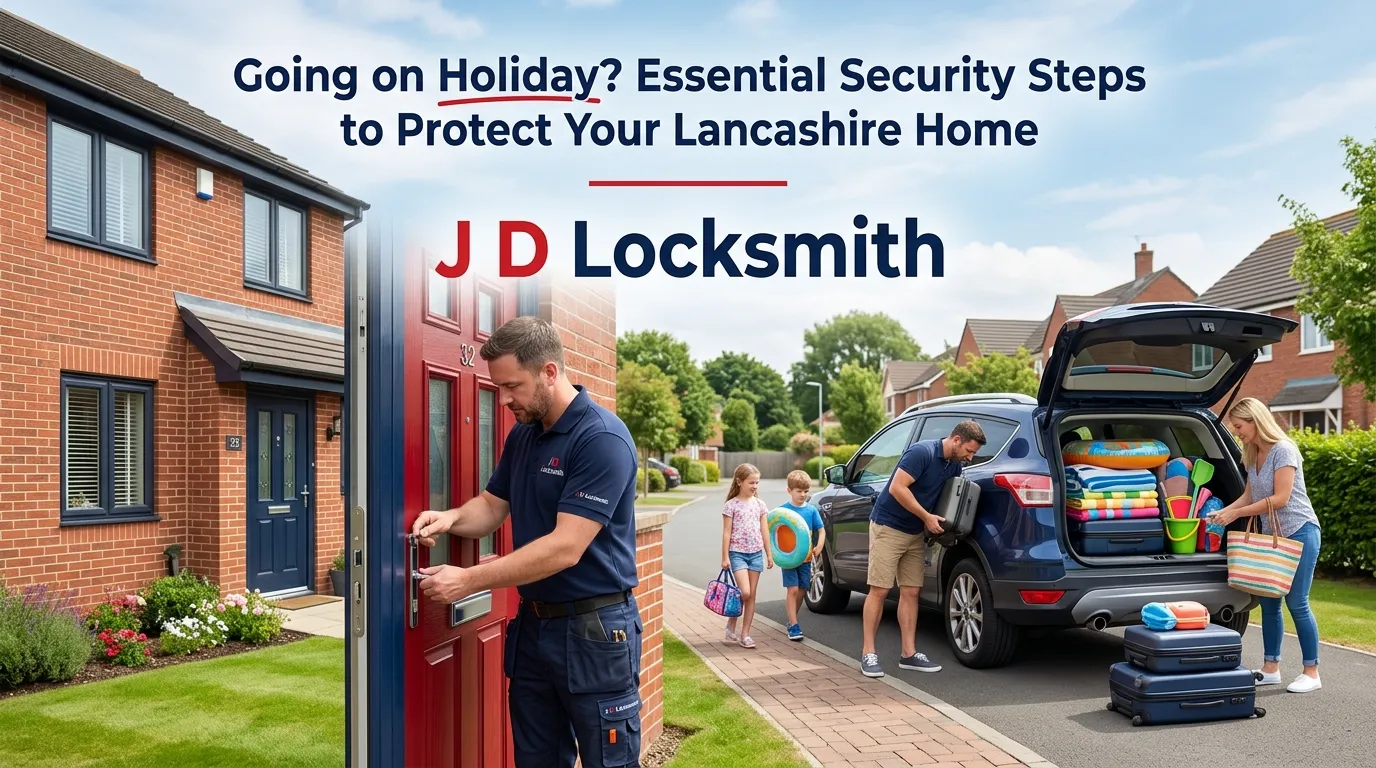
Going on Holiday? Essential Security Steps to Protect Your Lancashire Home
Your house sits empty for two weeks while you enjoy your well-deserved holiday abroad. Every day, dozens of people walk past your property going about their normal business. Most are just neighbours heading to work or running errands, paying no attention to your home.
But some people are observing your property through a completely different lens.
They notice the post building up behind your front door, clearly visible through the letterbox. The wheelie bins are still sitting on the pavement three days after the collection. The curtains remain in the same position every day. The windows that stay dark every single night. The garden furniture was left scattered around the patio. The ladder is leaning against your garage wall.
These observers are making a calculated decision about whether your house represents an easy target.
I’m Dan Collins from J D Locksmith, based in Lancashire, where I’ve worked for years. I’ve assisted police investigations following break-ins throughout the region. I’ve examined what burglars target and how they choose victims. I’ve spoken with homeowners who returned from holiday to find their houses ransacked. I’ve listened to their stories and witnessed the lasting emotional impact.
What strikes me most after all these years? Almost every holiday break-in could have been prevented with basic security measures. The warning signs were clearly visible to anyone looking. The security weaknesses were obvious to experienced eyes. The homeowners didn’t understand what burglars look for when selecting targets.
This guide shares what I’ve learned through real experience, not just theory. These insights come from years of helping Lancashire families secure their homes properly.
Understanding What Burglars Look For
Understanding how burglars think fundamentally changes how you approach home security. They don’t work randomly or choose houses on impulse. They look for specific indicators suggesting easy targets.
Signs That Nobody’s Home
Burglars watch potential targets for days before attempting entry. They look for consistent patterns that clearly indicate an empty house.
A post building up behind your letterbox represents the biggest giveaway to potential burglars. After three days, the situation becomes obvious to anyone paying attention. Nobody’s collecting mail because nobody’s actually home.
Bins remaining on the pavement days after collection send the same message. Your neighbours brought their bins back inside within hours. Yours are still sitting out there, days later, broadcasting your absence to the street.
Lighting patterns that never vary tell an equally revealing story to observant criminals. The same rooms are dark every night, suggesting nobody’s home, and the lights change naturally. Alternatively, one light burning constantly for weeks appears just as obviously artificial. Real homes show natural variation in lighting throughout the day.
Entry Points They Prefer
Burglars prefer quick, quiet entry methods that don’t attract neighbours’ attention. They assess potential access points offering the fastest route inside with minimal noise.
Windows left open by even a few centimetres provide criminals with perfect opportunities. Ground-floor windows represent the most accessible targets. But first-floor windows reachable from extensions or garage roofs also attract attention.
UPVC doors fitted with older standard cylinders have become major targets in Lancashire. These cylinders can be snapped in seconds using simple tools with no noise. Burglars gain immediate access without fuss or delay.
Weak back doors positioned away from street view represent ideal working areas. Nobody observes them attempting entry, giving them time to force locks without interruption.
Tools You’ve Left Out
Walk around your garden and observe what items you’ve left lying around. Notice any ladders? Heavy garden tools like spades? Stackable furniture?
Burglars use homeowners’ own possessions to break in, which adds insult to injury. That ladder provides easy access to the first-floor windows. That spade becomes a forcing tool for sheds. Those garden chairs stack together, creating ladders to reach bathroom windows.
Weak Locks They Target
Many Lancashire properties still have original cheap locks that builders installed during construction. These locks appear adequate to untrained eyes but offer minimal security against criminals.
Traditional Yale-type locks can be forced relatively quickly by experienced burglars. Cheap padlocks securing sheds snap easily under the pressure of a bolt cutter—standard UPVC cylinders without anti-snap protection break with simple techniques, taking mere seconds.
Professional burglars identify these vulnerable locks instantly from years of targeting similar properties.
One Week Before Departure
Starting security preparations a week before departure gives you adequate time to fix problems.
Assess Your Property Like a Burglar
Stand outside your front door and observe your house as a stranger would. What features immediately catch your attention? Which aspects appear vulnerable?
Walk around to the rear garden area and assess accessibility. Which windows could you reach without equipment? Which doors remain hidden from view? Where would you attempt entry?
This perspective reveals vulnerabilities you normally overlook when viewing your home as a resident.
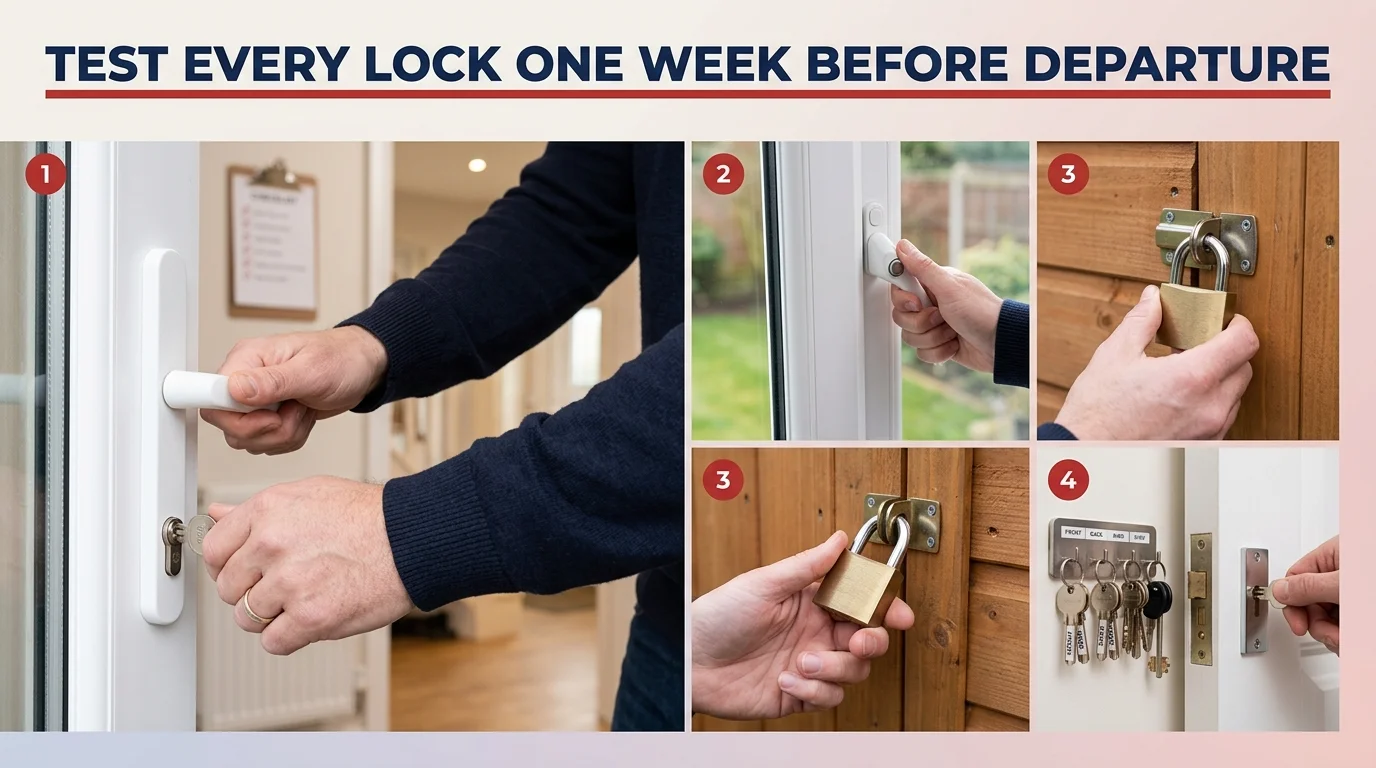
Test Every Lock Today
Never wait until departure day to discover that locks don’t function properly. Test everything now while you have time for repairs.
Try your front door lock and assess its performance. Does the key turn smoothly? Does the lock fully engage with an audible click? Can you feel everything locking securely?
Check your back door using the same assessment. Does the lock feel solid, or does movement suggest looseness?

Test window locks on every ground-floor window without exception. Lock each one and attempt to force it open. Windows should remain immovable when locked correctly.
For UPVC doors with multipoint locking systems, fully lift the handle and turn the key. Every locking point should engage smoothly without grinding or excessive resistance. Any unusual noises indicate problems requiring professional attention.
Found issues? You have a week to schedule repairs before leaving.
Upgrade Inadequate Locks
Still using old locks that were installed decades ago? Relying on cheap padlocks? Standard cylinders without anti-snap protection?
These weaknesses require upgrading before leaving your property unattended for extended periods. They’re too easy for criminals to defeat quickly.
British Standard locks for wooden doors provide genuine security and meet insurance requirements. Anti-snap cylinders for UPVC doors are essential for modern standards. Closed shackle padlocks can’t be easily cut with standard tools.
For professional lock upgrades in Skipton, Burnley, and across Lancashire, experienced locksmiths can assess your security. They’ll recommend appropriate upgrades for your property.
Sort Your Spare Keys
Where do you currently keep spare keys? Under a plant pot? In a fake rock? Above the door frame?
Burglars check these predictable locations first because they know homeowners use obvious spots. These aren’t secrets to anyone with criminal experience.
Give spare keys to someone you genuinely trust. A close neighbour you’ve known for years. A nearby family member. Someone reliable who can help during emergencies.
Ensure they know you’re going away and understand the dates. Provide contact details for emergencies. Tell them when you’re leaving and when you return.
Remove Burglar Helpers From Your Garden
Your garden likely contains items that burglars would use to break into your home. Tools and equipment you’ve left lying outdoors.
Lock Away Everything Useful
Walk your garden with fresh eyes and heightened awareness. What items could help someone break in?
Ladders represent the most obvious examples. Even small step ladders provide sufficient height for windows. Lock every ladder inside your garage or shed.
Garden tools provide ready-made forcing implements. Spades, forks, hammers, crowbars. Lock everything away before departure.
Heavy plant pots can break the window glass. Move these away from the house to useless positions.
Garden furniture stacks create makeshift ladders. Either lock furniture away or move it to the garden’s far corner.
Secure the Garage and Shed Properly
Your garage and shed contain thousands of pounds worth of valuables. Tools, bicycles, equipment, machinery. These buildings require proper security.
Examine what locks you currently have installed. Many garages have inadequate locks providing minimal security. Sheds often feature cheap padlocks that snap easily.
Upgrade to genuinely effective security. Quality hardened padlocks with protected shackles. Heavy bolts penetrating through the door, not just screwed to the surface.
For comprehensive door security services covering garages, sheds, and outbuildings, professional assessments identify weak points requiring attention.

Trim Back Helpful Vegetation
Large bushes and trees near windows provide excellent cover for criminals. Burglars work behind vegetation hidden from street view and neighbour observation.
Trim back anything blocking clear sight lines to windows from public areas. You want windows visible from the street so that neighbours can observe activity.
Keep plants positioned away from walls. They shouldn’t provide climbing aids for accessing upper windows.
Make Your Home Look Occupied
The most effective security involves convincing burglars that someone is home. Even when you’re actually abroad.
Use Timer Switches Cleverly
Timer switches represent cheap yet effective deterrents when used correctly. However, you must deploy them intelligently.
Don’t program the same light to activate every night at precisely 6 pm. This screams “timer” to anyone watching for several evenings.
Use multiple timers controlling different lights throughout your house. The living room comes to life around 5 pm. Kitchen lighting comes on near 6 pm. The bedroom switches on at 10 pm. The bathroom briefly illuminates at 11 pm.
Program slight time variations if your timers allow adjustable schedules. Real life doesn’t follow perfectly regimented patterns.
Add Sound Elements
A radio on a timer adds convincing authenticity to your occupation illusion. Sound from inside genuinely suggests someone’s home.
Position the radio near a window where sound carries outside. Program talk radio during the daytime. Switch to music during evenings.
Avoid leaving televisions running. These consume excessive electricity, and the flickering appears artificial.
Manage Curtains Naturally
Don’t close every curtain before departing for two weeks. This creates an abnormal appearance during the daytime, signaling absence.
Leave coverings positioned as you’d normally have them during weekdays. Open during the day. Request someone trusted to close them in the evenings.
Blinds work the same way. Normal daily patterns look authentic and natural.
Handle Your Car
Leaving a car at home? Ask someone to move it occasionally. Cars never move when the signal is unclear.
Even moving it from one driveway side to the other helps. Movement shows activity.
Deal With Mail and Deliveries
Post piling up represents the clearest sign that nobody’s home. Sort this before leaving.
Royal Mail Hold Service
Royal Mail can hold your post for collection upon your return. This costs a small fee but proves worthwhile for longer holidays.
Book this service at least several days before departure. Arrangements take time to process.
Trusted Neighbour Collection
Ask a close neighbour to collect the post daily. Someone reliable you trust completely.
Give them a key if needed or arrange letterbox collection. Check with them a few days before departure to ensure they’re definitely available.
Cancel Regular Deliveries
Stop milk deliveries if you receive them. Cancel newspapers. Pause any subscription boxes.
These items pile up quickly and advertise empty houses to observant criminals.
Remember restarting them when you return. Otherwise, you’ll come home without supplies.
Final Check Before Leaving
This represents your last chance to get security right. Take it seriously.
Room by Room Final Walk
Go through every room, checking every window is closed and locked properly.
Upstairs rooms often get forgotten during final checks. Check bathrooms. Check spare bedrooms. Check the loft access if you have windows there.
Downstairs, check everything twice thoroughly. Living room windows. Kitchen windows. Utility room. Even small toilet windows.
Lock Every Door
Check that all external doors are locked. Front door, back door, side doors, patio doors.
Check internal doors too. The garage door needs to be locked. Utility room doors that lead outside.
For UPVC doors, do your final test. Handle up. The key turned fully. All locks engaged. Push to confirm security.
Set Your Alarm
Have an alarm system? Set it before leaving. Know your code and test functionality.
Ensure sensors work properly. Check that the battery backup is good.
Give your alarm code to your key holder for false alarm situations.
Final Garden Check
One last walk outside, checking everything. Gates locked. Shed and garage secured—nothing left to help burglars.
Check bins. If it’s collection day, put them out. Ask someone to retrieve them.
If it’s not collection day, leave them in your normal position.
If You’re Already Away
You’re on holiday and suddenly remember something. A window might be open. A door might be unlocked.
Stay Calm Initially
Don’t panic immediately. Think carefully. Did you actually leave it open? Or are you just worried?
Most of the time, you locked everything. You can’t remember the exact moment. Holiday anxiety causes this.
Contact Your Key Holder
If you genuinely think something’s wrong, call your key holder immediately. Ask them to check your house.
They can lock windows you missed. Secure doors you forgot. Fix simple problems.
This demonstrates why reliable key holders matter. People you can call without hesitation.
Professional Security Help
For serious security concerns, you might need professional assistance. Locksmiths can secure properties remotely.
We can fit emergency locks. Board up vulnerable access points. Make homes secure until return.
For emergency services in Lancaster, Nelson, Colne, and throughout Lancashire, J D Locksmith provides rapid response. Call 07845 08 66 31 for immediate help.
Common Holiday Security Questions
How long can I leave my house empty safely?
There’s no specific safe duration for leaving houses empty safely. What matters is the security measures implemented, not the time duration. A well-secured house can stay empty for months without problems. A poorly secured house isn’t safe for even a weekend. Focus on proper security rather than arbitrary duration limits. Use timers, arrange check-ins, stop mail accumulation, and properly secure all entry points.
Should I tell people I’m going on holiday?
Tell trusted immediate neighbours only. Don’t broadcast holidays to everyone you know. Never post on social media that you’re away. Don’t mention it in public places where strangers overhear. Burglars actively look for this information through various channels. Tell people you trust to watch your property. Tell them when you leave and when you return. But keep it private otherwise.
What should I do with valuables before the holiday?
Move expensive items away from windows where they’re clearly visible to passersby. Lock valuables in a safe if you have one installed. Consider moving irreplaceable items to secure storage facilities. Take detailed photos of valuable items for insurance claims. Store serial numbers separately from the items themselves. Some people move computers and tablets to less obvious rooms away from windows. Don’t leave car keys near doors where burglars can reach through letterboxes.
Do timer lights actually fool burglars?
Timer lights work effectively when used properly with realistic patterns. Random patterns in multiple rooms look genuinely authentic. The same light at the same time nightly doesn’t fool anyone observing. Use different lights on different schedules throughout the house. Include upstairs and downstairs lights. Add hallway lights briefly. Make patterns resemble real life. Combined with other security measures, timers provide effective deterrents.
How much does holiday security cost?
Basic holiday security costs very little initially. Timer switches cost £5-15 each. Stopping mail is free or costs small Royal Mail fees. Window locks cost £3-8 each. Better security costs more substantially. British Standard locks cost £80-150 when professionally fitted. Anti-snap cylinders cost £70-120 per door. Full alarm systems cost hundreds or thousands of dollars. But basic measures effectively prevent most opportunistic burglaries.
Should I leave the heating on while I’m away?
Leave the heating on low during the winter holidays. Not for comfort, but to prevent frozen pipes. Set thermostats to approximately 12-15 degrees. This prevents burst pipes and the resulting massive damage. In the summer months, turn the heating off completely. Don’t worry about appearing empty. Cold houses in summer are perfectly normal.
Is social media really that risky?
Yes, social media genuinely creates risks for holiday security. Burglars actively monitor platforms for potential targets. “At the airport!” posts tell them you’re leaving now. Holiday photos show you’re currently away. Location tags confirm your absence. Check-ins broadcast you’re not home. Privacy settings don’t help if friends share your posts publicly. Wait until you’re home to share holiday photos. Don’t announce trips in advance either.
Don’t Come Home to a Burglary
Holidays should create positive memories, not nightmares about burglaries and violated homes.
I’ve met too many Lancashire families whose holidays were completely ruined. The frantic call from a concerned neighbour. The sick feeling as police describe what was taken—the violation of strangers going through your personal belongings.
Every single one tells me the same thing afterward. They wish they’d taken security seriously beforehand. They wish they’d understood exactly what burglars look for. They wish they’d spent an hour checking their home before leaving.
Don’t let this become your story.
Most holiday burglaries are entirely preventable with basic precautions. They target obvious weaknesses. They exploit careless mistakes. They happen because homeowners didn’t know better.
Now you know better. You understand what burglars look for. You know how to remove those warning signs. You know how to make your home appear occupied convincingly. You know which locks need upgrading urgently.
Take this knowledge seriously. Spend time before your next holiday checking everything thoroughly. Test locks. Move garden items. Set up timers properly. Arrange trusted help.
If you’re unsure about your home security before going away, call me at J D Locksmith on 07845 08 66 31. I can assess your property and identify weak points.
I’m Dan Collins, your local locksmith serving Barnoldswick and all of Lancashire and Yorkshire. I help families secure their homes properly before holidays.
I’ll visit your house and check everything thoroughly. Test your locks. Identify vulnerable points. Recommend practical improvements. Fix anything that needs fixing. All before you leave.
Then you can actually enjoy your holiday—no constant worrying. No lying awake wondering if you locked everything. Just relaxation, knowing your home is properly protected.
Holidays are meant to be enjoyable. Security worries shouldn’t ruin them. Prepare properly and leave confidently.
Have a brilliant holiday. Come home safely to find everything exactly as you left it.